Civil forfeiture should have a time boundary. If police seize your property, they should have 90 days to indite you with a crime and if they don't they should be forced to return all of your property.
I've read articles about how some police departments are training their staff to engage in this behavior and using forfeiture as a profit center. What they are doing is wholesale theft.
No time limit nonsense, get a warrant. Charge them with a crime. That's the law no matter what the idiots running courthouses in this country think, your precedent has no power here.
Unfortunately, unreasonable is subject to interpretation. I'm not saying it's right, but some could plausibly interpret civil forfeiture as "reasonable."
But. You naively assume judicial philosophy must be bound by rules, logic, common sense, ethics, public interest, or precedent.
Strike: ~~The Bill of Rights applies to people, not property. To rationalize civil forfeiture, the reactionaries created a legal fiction that property has agency unto itself. Further, property can be suspected of wrong doing, even by just by existing.~~
Edit: To rationalize civil forfeiture, the reactionaries claims the Bill of Rights applies to people, not property. Further, they created a legal fiction that property has agency unto itself. So property can be suspected of wrong doing, even by just by existing.
Worse, the rules for civil forfeiture are flipped. Whereas people charged in criminal court are presumed innocent until proven guilty, somehow property must be proven innocent. Apparently courts can prove a negative, even if logic cannot.
IANAL. Trying to grok the judicial philosophies of the r/iamverysmart reactionaries breaks my brain. These helped me kinda grasp what's happening:
Bennis v. Michigan
"On this week’s episode of 5-4, Peter (@The_Law_Boy), Rhiannon (@AywaRhiannon), and Michael (@_FleerUltra) talk about civil forfeiture, the practice that lets police seize private property if it’s suspected of being involved in a crime."
"...assets are seized by police based on a suspicion of wrongdoing, and without having to charge a person with specific wrongdoing, with the case being between police and the thing itself, sometimes referred to by the Latin term in rem, meaning "against the property"; the property itself is the defendant and no criminal charge against the owner is needed."
> The Bill of Rights applies to people, not property. To rationalize civil forfeiture, the reactionaries created a legal fiction that property has agency unto itself.
For this to make sense, civil forfeiture and in rem proceedings against property would have to postdate the Fourth Amendment and be a reaction to it, but they don’t.
No criminal charge against the owner is required because criminal punishment isn’t sought, not because it is an in rem proceeding. Its not an end run around either Fourth Amendment search and seizure protection or Fifth Amendment due process, both of which apply. As does the Eight Amendment Excessive Fines clause.
> Are you saying these "Robin Hood" style civil forfeitures are simply not legal (constitutional)?
No, I'm saying criminal charges are only required for criminal types of sanctions, and what civil forfeiture does isn't in that scope.
That's not to say I think its fine: I think its often bad for policy reasons, and the details of some of the current uses (especially state/local seizures under federal law) have particular constitutional and policy issues.
They can use whatever justification they like, however the constitution is the highest law in the land and what they say does not override it's text. They are behaving illegally and if I was in power they would be punished.
Also while I am ensured of this right by the constitution, the passage "The right of the people to be secure in their persons, houses, papers, and effects..." affirms that these rights are not granted but instead fundamental. Like the first amendment and others this is one of the "certain unalienable rights" granted by our creators.
It's more like: any assets taken by civil asset forfeiture should fund civics classes so that the people that are having their property stolen know just how anti-American that is.
It depends on how you frame the question. Asking "Should the police be allowed to seize large amounts of cash from a suspicious-looking (white guy/black guy/latino/hobo/terrorist/banker/politician)" will most likely get you a "yes" answer, as long as you pick the right target for your audience.
Civil forfeiture is a foundational part of the American way. We traded in humans at the start of our country. That has never stopped. Instead of being African Americans (or Black people generally) in current reality it's... our Black communities who we target and throw in prison which is the only exception.
Then look at Capitalism. Exploiting labor to drain any opportunity of wealth building from the working class and transferring it to those with wealth.
People have this twisted idea that America is a moral or ethical place. It's not. We live in a toxic culture and it has always been and it will continue to be. There is no escape.
If I check a suitcase full of money on my flight, or if I pass it through TSA security, I must consent to being searched (without a warrant) in order to fly.
It's not like I have a suitcase of money in my trunk and I've been pulled over by the police without cause and I can refuse to give consent.
Therefore I don't think the 4 amendment applies.
Isn't the argument for CAF that the mere possession of the large sum of money is just cause to confiscate it? That's why a time limit would work. DUring that time period, they could try to get a warrant. The judge would not give a warrant if that is the only evidence. Then the assets would be returned.
How does signing up for an account waive my 1st amendment rights?
> Congress shall make no law respecting an establishment of religion, or prohibiting the free exercise thereof; or abridging the freedom of speech, or of the press; or the right of the people peaceably to assemble, and to petition the Government for a redress of grievances.
It depends on how you define the free speech and how free it is.
You can say anything you want "in the public square" or "with a free press".
For example, go to the public library, or a government building, and they will have a little patch of land designated as the "Free Speech Z0ne" where Jehovah's witnesses and PETA fanatics camp out and hold up signs and vie for your attention.
You can go on Facebook and say stuff, but that's not "First Amendment Free Speech", that's a "private platform" and Facebook's standards control your speech there, not the First Amendment.
This xkcd is the stupidest one in existence. I wish he would just delete it.
I am sorry but you will never convince me that private companies should have more power than the government. It's such an idiotic premise on so many levels and it blows my mind that people like you still come around with that bullshit xkcd comic as if it means anything or is a sound argument for censorship.
You don't have any first amendment rights on facebook at all, nor are they required to respect the spirit of the first amendment as a private entity.
Again your 2nd amendments can not supercede my right to keep gunners off my property. It's my property not yours. You can walk around all day with your 50 cal rifle on your property and (lots of ) public land, depending on the state
You don't waive your first amendment rights when you sign up for Facebook. The first amendment protects you from the government in respect to freedom of speech. Private corporations can restrict your speech and that has nothing to do with the first amendment.
A lot of your complaints are with the libertarian nature of our government.
The constitution protects private dictators from interference by the government, not citizens from interference by private dictators. It’s an important distinction to remember in the USA
It also regularly happens that people are pulled over and subject to forfeiture. The first time I heard of it, it was an article about someone who was driving to pick up a car they had agreed to purchase over the internet. They had, iirc, something like $20k in their trunk, and the police seized it in a traffic stop.
The government suspects someone of committing a crime? File charges and bring them to court.
At the very least, CAF should require a warrant. Cops should not be able to seize assets as part of a typical traffic stop.
I just can't see how CAF has survived so long without being ruled a violation of our Fourth Amendment right against unreasonable searches and seizures.
Does that make sense? It doesn't to me. The phrase "power structures" isn't even one most people understand (I'm not sure I do, and I'm a lawyer) so it's hard to believe the hundreds of police organizations that independently exist across this country exist to maintain them.
Police exist because they were funded by governments. They are the way they are because of the various incentives, organizational politics, their day-to-day experiences on the job, and the minds of the people who staff them. Rather than declaring them part of a fascist plot, why not just try to think about where improvements can be made?
It makes sense that the police exist to enforce existing power structures, yes. The people in power (wealthy individuals and organizations who can buy political capital, and the politicians that represent them) use the police as a threat of and actual tool of violence to subdue anyone that would challenge their power.
> Rather than declaring them part of a fascist plot, why not just try to think about where improvements can be made?
The first step to fixing a system is to understand it. Taking a valid description and twisting it in to an accusation of a "fascist plot" is a great way to ensure you will never understand the system in the way which is required to actually improve it.
We're all trying to frame things in a way that will logically lead our preferred solutions.
But the description "police exist to enforce existing power structures" implies that the power structures are illegitimate, which suggests that the police are as well, which in turn suggests we should tear it all down and start over.
But I've never seen anyone who 1) recommends tearing everything down and 2) has a realistic (or even defined) plan to rebuild it.
I've seen plenty of anarchists who do recommend tearing everything down. Antifa has clothed themselves in the name of supposedly being against fascism, but they define fascism as any current system of government. They're anarchists, though the media covers them as "activists."
The "defund the police" movement originated with BLM, not Antifa. And the Wikipedia page[0] for it mentions the plan, in general terms
supports removing funds from police departments and reallocating them to non-policing forms of public safety and community support, such as social services, youth services, housing, education, healthcare and other community resources. Activists who use the phrase may do so with varying intentions; some seek modest reductions, while others argue for full divestment as a step toward the abolition of contemporary police services. Activists who support the defunding of police departments often argue that investing in community programs could provide a better crime deterrent for communities; funds would go toward addressing social issues, like poverty, homelessness, and mental disorders.
Only racists and trolls with an agenda refused to comprehend that Black Lives Matter didn't mean "Only Black Lives Matter." And continued to refuse to comprehend no matter how many times it was explained to them.
There's nothing the left can do about intentional bad faith representation of their messaging, that's just par for the course.
> But the description "police exist to enforce existing power structures" implies that the power structures are illegitimate, which suggests that the police are as well
I think this is fairly evident, yes.
> which in turn suggests we should tear it all down and start over.
Well it certainly suggests something should be done. Tearing it all down seems like a straw man though. Certain aspects of it should certainly be torn down.
> But I've never seen anyone who 1) recommends tearing everything down and 2) has a realistic (or even defined) plan to rebuild it.
I do think it's very funny when people use their own ignorance as evidence for an argument.
That statement is a follow up to my earlier argument (in the GP comment) which includes substance. But saying "I have never seen evidence so there must not be evidence" is a clear logical fallacy.
American police are the way they are (including their ability to arbitrarily and indefinitely seize your property without charging you with a crime, as discussed here) because nobody with the power to put meaningful checks on them has chosen to do so, and in the absence of checks police organizations tend to evolve into state-sanctioned criminal gangs.
That's the picture as it exists today. If you don't see existing power structures anywhere in that picture, you may need [new] glasses.
They didn't say it was a fascist plot. And, well, it's factual that the origin of policing in the U.S. is in enforcing slavery and post-slavery racism. All it takes is a large number of fascist-leaning people with government blessing to self-perpetuate. CAF is one way that happens. Cops rob people and then buy fancy coffee makers and other things to make their jobs more enjoyable. Very simple incentives enforce the power structure.
> They are the way they are because of the various incentives, organizational politics
Congrats, you just provided a description of "power structures". Now you know.
> Rather than declaring them part of a fascist plot
Especially as a lawyer, you should know better than to put words in someone else's mouth - it leads to people distrusting what you say. I'll certainly be more closely checking what you're replying to from now on...
>Congrats, you just provided a description of "power structures". Now you know.
The problem with a phrase like 'power structures' is people who use it get to define it to be whatever they want it to be. You're telling me here that it means 'incentives and organizational politics' (factors that affect any group of humans, regardless of the political 'power' of the group's constituents). But other places I see definitions like 'banks' or 'rich people.'
>Especially as a lawyer, you should know better than to put words in someone else's mouth - it leads to people distrusting what you say. I'll certainly be more closely checking what you're replying to from now on...
That's my reaction when someone tells me I'm a part of a power structure -- they're effectively calling me a fascist. I think it's a fair reaction given the way political conversations go these ways. I appreciate your attention to close reading, though, and am genuinely sorry to hear you don't trust my commentary.
> Rather than declaring them part of a fascist plot, why not just try to think about where improvements can be made?
This is a good point. Fascism is made up and has never existed, and it certainly has never been created or perpetuated by police. It is a mystery why anyone would make a statement otherwise when the better option of discussing theoretical incremental change is on the table.
Yes. We must only ever effect change within the system, in ways that don't upset the status quo or in any way inconvenience those in power. Like that nice, polite fellow Martin Luther King Jr. Whatever happened to him?
I don't really buy this line of thinking. I guess you're adopting the 'Malcolm X' approach versus the 'MLK' approach, but actually, meaningful change in an organization devoid of calling people nasty names and criticizing them personally ('cops are pigs') IS MORE UPSETTING to the status quo than your approach.
Going to police stations and identifying issues with them, and describing them in apolitical terms, and asking the police chief to consider and act on them, and voting him or her out if they don't act on them, is more 'revolutionary' than standing outside their office with 'ACAB' posters.
I like this reasoning. Not enough people are spending their energy admonishing others for being rude about cops online. If we all just organized to stop anybody from being mean to them on the internet we could end civil asset forfeiture.
This is the equivalent of someone saying "I'm a software dev, implementing X feature is difficult to impossible" and then getting the reply "that's because you're too entrenched in the current system."
I like that saying, too. But not sure it applies here -- there are huge numbers of lawyers who like talking about 'power structures.' It may have been invented by us. We lawyers invented, for example, critical race theory.
You could be right, though, maybe I am biased. I'd be interested to learn how.
Because of the Police's past and ongoing actions and behaviors. But let's make it out that those people that have become jaded regarding the Police are the ones acting in bad faith, versus, you know, the people with authority whose own actions are the cause of 'needing to make improvements' which in the current discussion is a reduction a euphemism for 'the Police stealing people's property'.
The police do prevent "mob rule" today. They use violence to keep a minority of wealthy people atop a social hierarchy. When the "mob" below acts up, they violently quash them.
Like, think of any mass social protest movement. Who is the primary "boots-on-the-ground" opposition? It is always the police. It will always be the police. That's what they're there for.
I’m describing an ideal future state. You’re describing the suboptimal current state. This is why I emphasized “should”.
In my city the police deliberately avoid enforcing basic traffic laws and petty crime in a bid to get more funding. As that continues more and more of my neighbors arm themselves. At some point the scales tip and the people take matters into their own hands.
Police can abuse their power in the short term but it can’t continue forever.
I actually suspect you’re describing what I’d consider a suboptimal future state, but it’s hard to tell because most of these words are pretty vague.
Like, what exactly is “mob rule”? Why am I supposed to fear it? Why is it worse than today’s system of rule by a powerful unaccountable minority?
Why is it per se good for the police to enforce laws and fight crime? Those are both social constructs that can target anyone we want them to. 60 years ago, they would have prevented me from marrying my wife; 90 years ago, they would have prevented me from fleeing genocide.
What happens in your ideal future state if the rich and powerful refuse to change unjust laws? If people rise up against oppression, what happens?
Actually, that is not the reason why they should exist. That is the story you are told. But this story has never been true, the propaganda is just a bit more effective these days.
I mean. Look at: Paw Patrol, Miami Vice, Tokyo Vice, the Wire, Criminal Minds, Chicago PD, Southland, Bosch, Law and Order: all of them, law and Order: all of them, CSI: all of them, Luther, The Shield, Reno 911, etc.
I mean this list is just from the top of my head.
We are being indoctrinated in our image of the police. Some rotten apples are shown, but in the end they are always The Good Guys.
Uh. Cops are certainly not always portrayed in media as the good guys. The Wire and Reno 911 aren’t even positive portrayals. On top of that media portrayals are irrelevant in this context.
The alternative to a state monopoly on violence is mob rule. You can call that state entity whatever you want, police, militia, whatever. But some regulated construct needs to exist.
If you can’t separate that concept from the current model of policing it’s unlikely we can have an interesting conversation.
Well, if you are talking about the United States and the supposed Supreme Law of the Land that nobody seems to be too well educated on nowadays, actually it is the job of local militia to defend and enforce civil order
You can not have a free society without a populace taking responsibility for their own. There is a reason the slogan "freedom isn't free", was a big thing in America til just a generation or two ago. The second you start delegating things like safety to the gov you've lost.
Just look at modern America, a giant portion of folks cannot survive without gov assistance now, and look where that got us. How can you oppose a corrupt gov if you cannot even survive without it?
Unless you are so brainwashed (as many still are) that you think that the total lack of privacy and agency in modern America is both good, and somehow fitting to the intent of the Constitution as written.
So you want to disband all police and leave police powers entirely in the hands of "local militias", which according to current definitions of the 2nd Amendment are (reading notes) literally any American with a gun?
Like these jackasses[0]. You want to give these people the right to arbitrarily arrest, detain and kill because two centuries ago Thomas Jefferson saw the horrors of the French Revolution, got the biggest boner of his life and thought "how about that, but a whole country, all the time?"
No thank you. I don't trust the cops but I trust my fellow armed Americans even less. At least the police, ostensibly, have a system they have to abide by other than a piece of parchment saying "everyone gets as many guns as they want, no questions asked." What you're advocating is essentially gang warfare.
Also, "freedom isn't free" became popular as a meme from South Park making fun of the wave of jingoistic, patriotic BS songs after 9/11.
I trust local communities more than state officials any day, yes. Nothing is perfect but if you legitimately think the government is functioning well at this point, I don't expect to convince you so yeah. To each his own.
> Unless you are so brainwashed (as many still are) that you think that the total lack of privacy and agency in modern America is both good, and somehow fitting to the intent of the Constitution as written.
Please bring data when making bold assertions. You are making the assertion: "a majority of people agree with the statement: 'a total lack of privacy and agency in modern America are both good'" - without data, you don't know and it is best left unsaid. It's individuals all the way down and you don't know the context and experiences of others. Again, without data, nobody knows.
-------------
Let's move along. I found this to be really interesting:
> Well, if you are talking about the United States and the supposed Supreme Law of the Land that nobody seems to be too well educated on nowadays, actually it is the job of local militia to defend and enforce civil order
Where does that idea come from? Honest question. Where can I read more about that?
----------------
Generally to understand US history and its laws, my understanding is you need to look to British history and British Common law.
"During the War of 1812, state militias were intended to be the primary fighting force. Unfortunately, while militiamen showed willingness to fight, they were untrained, undisciplined, and ill-equipped." [1]
This is to say the militia was intended to be able to come together in aggregate to form an army.
Going further back to British history:
"Under Elizabeth the English militia system developed still farther; indeed, it was during her reign that the phrase "militia" was first used to describe the concept of a universally armed people ready to stand in defense of their nation" [2]
Resource ([2]) is a fantastic read and gives a very compelling rationale why the 2nd amendment was actually intended as an individual right to bear arms rather than just the right to have well regulated militias. I think you'll find it interesting.
Overall, the rights to religion, the right of assembly and the right to bear arms were very important to the US constitional assembly because this had happened a hundred years prior under a British King:
> Following Cromwell's death, the English were more than happy to accept back the son of the late Charles, Charles II, as monarch. Charles II promptly dissolved the army, offering full pay plus a (p.50)bonus from his own finances, and guaranteeing work on public works projects for the demobilized troops.[31] He also sought to secure himself by a variety of legislation which people in Parliament, in their haste to welcome the end of Puritan rule, did not recognize as dictatorial. In 1661 and 1662 he expanded the definition of treason, imposed press censorship, restricted practice of religion by Puritans and others and leveled the protective walls of many towns which had sided with Parliament.[32] Instructions were also issued to the lord's lieutenant to form special militia units out of volunteers of favorable political views, "the officers to be numerous, disaffected persons watched and not allowed to assemble, and their arms seized...." [2]
In sum, the militias were intended as the backbone of a citizen army. That is very much in line with the idea of a government for the people and by the people. These ideas make a lot of sense to me, but I personally question their applicability following the Industrial Revolution.
In sum, the first and second amendment essentially codify that a King can't the rights away of assembly, religion or bearing arms from anyone, regardless of whether they follow the same religion as the king or agree politically with the king or not.
If you want some solid reasoning for why the 2nd amendment is an individual right, do check out [2]. [2] was a very convincing read for me and before reading it I disagreed with the statement that the 2nd amendment guaranteed an individual right to bear arms.
Police has lots of problems in USA. But go live in the country without effective police force first, and then talk about how police isn’t here to enforce laws and justice.
Police here are not interested in justice, and this is trivial to prove based on their behavior.
Courts have also ruled that police have no duty to protect citizens.
Policing in the US is fundamentally broken. That there exist places with worse policing problems does not mean ours are not serious, foundational, and endemic.
That's a hilarious and counterfactual thing to assert on a thread noting that cops literally steal more money from people than criminals do.
Cops do what is easy, by and large. The overriding motivations in the job do not align with the values that the public would actually WANT from a police force. They are not required to "protect and serve," and have actually argued in court (and won!) that they are not required to protect anyone.
They are protected by a union with absurdly outsized power, which prevents real accountability in all but the most egregious cases. These unions and their fellow-travelers work hard to prevent common-sense recordkeeping on national violent incidents by cops, and to avoid any kind of national peace officer licensing and certification that would keep bad cops "fired" by one city from just drifting to the next town over and continuing their behavior.
Police can have big problems, that you mention, and at the same time can be interested in justice.
Are software engineers force of evil, because of lot of them work for companies that disregard privacy and make billions of dollars off it? And are not required by law to follow ethical standards?
Software engineers are not uniquely empowered to deploy violence against more or less anyone they want with little chance of liability or repercussions. There is no "qualified immunity" for a software engineer who beats an unarmed motorist for no good reason.
Software engineers can build systems that are going to kill people and face no legal consequences for it (like Uber self driving car - it was extremely reckless, and engineers behind are not in jail).
Be realistic. Software engineers are creating nowhere NEARLY the problem that unchecked, unaccountable, and violence-prone American police are causing.
I feel like you're either very naive about American policing, or you are unwilling to engage with this in good faith, so I'm going to bow out here -- but your comparison is honestly risible.
Be realistic? According to you every single policeman is a dirty criminal, and each and every police department is a mob and lawless institution.
I’m agreeing from a start, that USA police has tons of issues. But it’s not a lawless institution. Really, go live in a country without effective policing and then we can talk if USA police is only bringing lawlessness to the table.
At no point have I said anything resembling "every single policeman is a dirty criminal," but your assertion that I have definitely proves the points made in my prior reply.
90 days is a long time. Imagine a recent college graduate moving cross country to a new city in search of work. They are unlikely to have resources to live for 90 days if the cops seize all their cash.
The cops can get a warrant. If they can’t convince a judge then they don’t need to seize anything. The police serve us, not the other way around.
The money is often used on personal expenditures like a new F-350 truck for personal use, commemorative Super Bowl badges, or premium salmon-jerky dogfood (actual examples from Georgia). Most seized money does not even get put into a general fund for budget-based reallocation and is left up to discretionary "slush fund" use.
The "proper" solution is that any property, cash, fines, etc. produced by the "criminal justice" system goes only to victims and anything extra should always go into a fund that gets returned directly to the citizens.
It doesn't go into a budget. It doesn't fund anything else. Anything collected goes to victims or it goes back to the people.
Not quite all, the arbitrary exercise of power is itself an incentive. You can use it to intimidate people or to punish people you don't have the evidence to prosecute (which is to say, those with the presumption of innocence).
Victims of crime should not be given special powers. If anything, their biased position makes them less able to understand that the accused has rights, should be evaluated impartially, are presumed innocent, and shouldn't be subject to unfair punishment if proven guilty.
I'm really tired of seeing internet commentary on "tough on crime" attitudes where people think victims are basically judge and jury, possibly omniscient, and their hurt and revenge fantasies should decide policy for millions of unrelated people, supersedes the needs of everybody else, like our need to have an impartial justice system and prevent wrongful conviction.
But getting back to your comment, if you want to know where the "perverse incentive" is in your proposal, it creates incentive for someone to falsely present themselves as a victim of a crime.
After thinking of this exact thing for maybe 30 years I think all fines, etc should be turned over to the Social Security Administration. Advantage something like 98% of the money transferred to SS goes right back out the door.
Nope. CAF is theft. Reallocating the ill got gains to something you like doesn’t make it right. SSA is worth funding on its own. We shouldn’t need to arbitrarily steal from people to fund it. And we certainly shouldn’t leave SSA funding up to the police.
We have fundamental concepts like equal representation and equal treatment under the law that clearly show CAF to be wrong.
That’s treating a symptom. CAF is already laundered through the feds. If local PDs give their CAF gains to the SSA (or any other organization) they will get equal contributions in return. This is literally what already happens.
Where I live we have the electricity bill system that kind of works that way.
The idea is that let us say the normal price of electricity would be e.g. 10c / kwH.
To incentivize people to use less electricity we charge 20c/ but the extra 10c go to the fund which at the end of the year is split evenly between all electricity consumers.
So basically everyone pays 20c x consumption -10c x (average consumption).
No. I'm just pointing out a working system where there is a negative financial incentive used to police the population behavior without the problem caused by making it a profit for whoever creates the policy.
The problem with that is as inefficiency grows within the organization that receives the money - so do incentives to capture more. Even if it's coming from an external organization (the police), they can still communicate and find ways to work together through this perverse incentive.
This is more difficult if 100% of it goes out the door. Hypothetically you could still get ecosystem issues, though. Where an org argues for more fines so that their existence is justified and that they don't shrink. etc.
The allocation of ill gotten gains is irrelevant. This is theft. These are assets that belong to honest citizens. It’s unacceptable that they would lose their honest gains to the whims of a cop.
Yea, don't think anyone (or at least myself and the parent) are arguing anything related to that.
we're discussing the incentives that lead to police becoming thieves. Which is just as important as the police being thieves. Assuming you want to fix the root cause, at least.
The incentives are what put those systems in place. It's two halves of the same coin. One is cause, the other is effect.
You don't think as long as they have incentive to fine more as it directly influences their budget, that it might affect their actions towards fining and seizing citizens? Are you saying it's unrelated?
edit: To word it differently, do you think solving this one problem will end their association with your money and their budget?
> Civil forfeiture should have a time boundary. If police seize your property, they should have 90 days to indite you with a crime
I think you are slightly confused. Civil asset forfeiture does not require any crime (hence civil asset forfeiture, rather than criminal asset forfeiture), and the government charges the property itself, the owner is a third party claimant.
The argument being made is that the structure of the government in the USA defines persons and effects as both being part of the 4A with the same standard of protection against unreasonable search and seizure.
The language of the clause means you can't disconnect persons, houses, papers, and effects.
People are secure in their persons, their houses, their effects.
It's not a weird quirk of some conflicting criminal/civil law.
It's part of the document that binds all other laws.
Making people a third party to their effects means you could also do that to their person, which is complete nonsense.
> Civil asset forfeiture does not require any crime
But it certainly does require suspicion of wrongdoing. You can't just walk up and take something from someone just because you don't charge them.
I think it shouldn't exist unless the person they take stuff from is convicted, and say a year or two has elapsed, before anything in a cache has to be returned to them, and returned immediately if they are proven guilty.
That would still be an improvement over today where one never needs to be charged with a crime at all and only the stack of cash has a right to defend itself in court.
> Basically, you must prove a negative: that you did not commit a crime. It’s a complete inversion of the “innocent until proven guilty” philosophy driving most of the criminal justice system.
That's because it's civil forfeiture. There is no presumption of innocence in civil law; it's part of criminal law.
While this is an accurate assessment of its legality, it’s not a particularly helpful response to the philosophy. And whether intended or not, it has the effect of implying the distinction may justify the practice.
From my perspective, “cops can take your stuff unless you prove your innocence because it’s not a criminal proceeding” is a distinction without a difference. Cops shouldn’t be able to just take your stuff.
I don't argue with that! I just explained how it was possible to implement it in law in the first place. But yes, it absolutely must have been a criminal procedure, as it is in some (many?) other countries.
The government has to prove suspicion of wrongdoing on a preponderence of the evidence.
Edit:
You can show up to a civil forfeiture case as a claimant, refuse to answer other questions under the 5A, and walk out with the goods if the judge doesn't think there's any wrongdoing.
First off all…mind blown. I had no idea the presumption of innocence didn’t apply to civil law. Second, is slapping a “civil” label on there all you have to do to make it reasonable? “But judge, you can’t put me in jail. When I took that guy’s wallet at gunpoint, I made sure to inform him that it was civil-armed-robbery.”
Edit: rhetorical question as I don’t think you’re actually of the opinion that it’s reasonable.
Imagine you arrange some "send goods, receive payment later" kind of deal with someone; you send them the goods but they never pay you. So you bring them to court... and now you have to prove that they did not pay you. While they claim they did and even gave you a signed receipt which you must have thrown away.
So naturally, because in most civil cases its the other party's inaction that's supposed to be punished, courts adopt "guilty until proven otherwise" stance. Now it's the other party that has to show a receipt signed by you, or to show their bank statement that says they've transfered money to you, etc. That's one reason why there is so much paper trail in business and commerce — so that's when someone sues you, you could use all that paper to cover your ass.
This discussion (not just your reply) wasn’t sitting right with me so I had to look into it a bit closer to get more clarity. While it’s true that the concept of innocent until proven guilty doesn’t exist in civil cases, it doesn’t appear that the opposite is generally true. The burden of proof is still on the plaintiff, though the bar is much lower than for criminal cases (which comes as no surprise).
As a legal idea, civil forfeiture is something the state specifically empowers police to do. This is on top of cops pretty much being able to do what they want without recourse. Normal civilians don't have this luxury.
Legitimacy stems from the consent of the governed. The state and the Constitution determine what powers the state has, eg, by passing laws and by subjecting them to judicial review.
A pretty sentence, but since the courts have upheld both qualified immunity and civil asset forfeiture, it appears the people have granted the power to do so.
Aye, there's the rub. No politician wants to be portrayed as "soft on crime". Until the problem becomes too large for the average person to ignore, the law isn't going to change. A smart police force stays just below that threshold.
IIUC in US constitutional terms the concept of "innocent until proven guilty" is actually "innocent until something (eg a trial) pronounces you guilty".
The difference being that who needs to prove what can be quite flexible.
I agree, my intent was not to say that there are no standard at all, but rather that the constitutional phrasing leaves a lot latitude.
For example congress could legislate that some specific crimes should use "preponderance of evidence" rather than "resonable doubt" or even require that the defendants prove their own innocence beyond resonable doubt.
In the case of civil forfeiture I suspect that the individual whose property was seized has a constitutional right to appeal in some way, but also the constitution has little to say about the rules of that appeal process.
A huge part of why I think civil forfeiture as a practice should go away entirely. Due to the burden of proof being set on the party that just had their resources seized[1], it often amounts to state sponsored robbery.
[1]And whom, even if they still had those resources, quite often wouldn't be able to afford the costs associated with proving themselves innocent to get their stuff back in the first place.
Or kept for themselves. One sheriff recorded himself driving through an upscale neighborhood and going car shopping. He found a car that he liked and said he was going to seize it and keep it for himself.
Calling it civil forfeiture is in itself problematic. The assumption is that the person committed a crime and profited from it. Kinda of a weird mix. You must prove you did not commit a crime in a civil case.
The original use case of CAF as a way to seize assets of unknown or absentee owners with clear connections to crimes makes it make more sense both legally and philosophically. IMO the big fix for civil asset forfeiture is that if there is a claimant you need to charge them with some crime to seize it and it has to go through the normal process.
It actually sounds unconstitutional when you put it like that... but then again, if you don't put it like that then it doesn't! Law is like an ass, isn't it, it goes in whatever direction the drover points it.
You have to prove the cash did not commit a crime. This sounds absurd, but it's easily prove, the cases are named things like United States vs. $117,000 in Cash and State of Missouri vs. Gold Jewelry Worth Approximately $1400.
But if that's not absurd enough for you, boy do I have some good news for you! Since the case is against the property, you the previous owner of that property don't automatically have standing. Court cases in the US are based on common law (except maybe Louisiana, who knows what goes on in that Bonapartist shithole), to appear in court at trial, you have to prove that you're actually a party to the case. It's automatic if you're the defendant in a criminal trial (or plaintiff in civil), or the prosecutor... but third parties are usually told to pound sand. And the case clearly names the property as the defendant.
Don't let me overstate it... as far as I know, no one's ever been denied standing when petitioning this, but it's another hoop to jump through. One that will cost you money.
If they seized less than $10,000 or so, forget it. It'll cost you that to get the stuff back. So they tend to target lesser amounts now days, knowing that no one will bother. And if it's a higher amount, they'll often try to settle... "hey we know it will cost you another $5000, so why don't you take half and we keep the rest?" Of course, you're still paying the lawyer a few grand to get that far, and it will come out of your $5000, and not their (using that word pains me) half.
If you haven't retched in your own mouth a little, then I still haven't properly explained how bad this is. Go read.
If you possess legislative powers (which no single person actually does) then sure, you can decriminalize murder and make it a non-criminal offence.
But why? You lose your presumption of innocence, you lose a guaranteed defence attorney, and you still face years of prison and maybe even the chair... there is a reason why offences with gravest punishments (that is, crimes) have pretty strict procedures and proof requirements set up around them.
Because the action is against the property being seized, not the owner of said property[0]. Property cannot commit a crime, and therefore cannot be the defendant in a criminal proceeding, but at the federal level and in almost every state, there are civil statutes permitting these cases to be litigated by the government in rem.[1]
0 - note that if this happens to your property, it sure will feel like it is happening to you. Lawyers will be happy to lawsplain their BS theory[2] to you for a nominal hourly fee. This will not make you feel any better for having been robbed at gunpoint.
Interestingly enough, property used to be able to commit a crime (back when slavery was a thing) but it still could not be sued or be the plaintiff in a lawsuit.
Indirectly, because the idea behind it is old and pertains to very peculiar circumstances.
Imagine that it's 1804, and a ship shows up in port carrying contraband. The sailors on the ship didn't know about it, they just make sure the boat doesn't sink. The owners are nowhere to be found, they live in London or Paris or Antwerp or something, and you'll never be able to arrest them for it (this is the pre-extradition world).
What do you do with the contraband? You need a formal law to deal with seizing it. And this serves as the framework for our modern civil forfeiture laws. A case would be entered into the dockets something like "State of New York vs. 152 Gallons of Whisky" or whatever. The whisky itself committed no crime, there can't be a criminal case.
Even then, maybe it's actually the crew that took a couple of additional crates of whiskey/cigarettes as a side-gig (pretty normal even today) and not on the owners' orders, good luck trying to prove it or anything at all, really.
I want closure on the 25 year old woman and the $100k she was transporting in a suitcase. Did she go to court to get it back? Or is this a situation where 9 times out of 10 the cash was ill-gotten and so it is forfeited to avoid criminal charges?
Almost certainly. I can't think of any other reason you'd take $100k on a plane.
But there are plenty of stories out there of people having very large amounts taken from them on their way to buy cars or whatever. The story probably picked a bad example but the police are definitely just taking whatever they can get without any regard for justice.
Rushing to close a deal on a high value asset such as a boat, aircraft, or real estate where the seller insists on actual cash. Granted, you should probably use some form of durable check, but some buyers want actual cash. There are also cultural business habits in some ethnicity/national backgrounds to prefer actual cash over safer bank instruments.
It really doesn't matter: if someone wants to carry a large quantity of cash on a plane, this is still an open society and freedom must be defended.
Wouldn't you withdraw your cash at your destination to avoid the obvious and huge risk of your luggage being lost?
I agree there probably are times that it happens, but it's very unlikely. There are much better examples where the police steal large amounts of cash even when there's an obvious legitimate explanation.
My brother had his phone stolen when he was in middle school.
He and everyone suspected one classmate. Cops searched him and found the phone and other stolen phones. They were all taken into “evidence” and refused to give it back no matter how many times we asked.
It's completely astonishing how low the ethics standards are for police officers in the US! Even if this is the standard procedure, you'd expect that a decent person tries to work the system in favor of kids whose phone was stolen. But what do we expect from police officers who typically require less training to become an officer than is needed to get a license as a cosmetician?! I dream of a US where it takes 1.5 to 2 years of schooling to become a police officer. Where officers take hundreds of hours in law, ethics and de-escalation classes. I want police officers who have book clubs in which they have heated discussions about Kant's and Foucault. I want police officers who are passionate and knowledgeable about justice, are true experts in law enforcement and improving our society and hold each other accountable! I don't think that's unreasonable, given this is equivalent to the professionalism I expect from other people who are good at their profession.
There's a process for recovering property from the police. Did you do more than ask some beat cop who's first instinct is likely to be unhelpful because they're an untouchable mafia?
> That pattern has held true for three of the last six years, although numbers in 2014 and 2015 were skewed somewhat by big, legitimate forfeiture cases involving huge sums of cash: the Bernie Madoff scandal, for instance.
This is a pretty big freaking caveat. If you actually look at the DOJ source, about $1 billion a year comes from low-level seizures (https://www.justice.gov/d9/pages/attachments/2020/02/09/afp_...) Almost all of the rest comes from huge white-collar busts.
The white collar seizures almost work the exact same way. Toyota was never charged with a crime over their accelerator pedal issue. But the government just seized 1.2 billion from them and kept a huge chunk of it for themselves.
They used this law against me in East Texas. Cost me $8000 to get my car back. They threatened me into signing a confession note. There police station looked like a pawn shop on steroids.
I see a lot of commenters pointing out that this includes legitimate forfeiture due to criminal activity.
That is certainly true. But how do you measure legitimate vs illegitimate taking of property?
With burglary, it is fairly trivial. But otherwise? I'm not aware of statistics breaking down the amount of money and assets that get taken without any charges.
I can hope that the numbers "seized" don't include things that are returned after verification of ownership or any other exonerating circumstances. Is that tracked?
That is, this is much less concerning if the numbers are such that 90%, say, is proven illicit.
Well the $100k story was determined to not have any evidence/proof beyond police suspicion (you can find more details that were released after this was written - the cops didn't like that her eyes darted once during questioning, that she said the luggage was gray not black, the cops said they smelled weed even though there was none found, etc - that was sufficient justification to seize the cash and close the case without filing any charges) and the money was not returned
To get the money back, it must be fought in court. Legal fees are not returned if the case is won, and if lost, you must cover the defense fees. In Illinois the median forfeiture was about $1k, with many <$100 forfeitures clustered in the poorest neighborhoods, while lawyer fees are ~$3k for state/local police cases. Federal seizures are much more expensive to fight.
There's no process where the police further verify the provenance of the cash they seize and return it without it being fought for in court. It's taken and they celebrate it and move on. So as with most police oversight, the numbers you're asking for don't exist.
Only house news I remember was the one that went to the supreme court, and that is more than a touch different. They didn't seize the house before court actions, but as a court action. Right? This is very different.
When I was arrested the cop took the money out of my wallet and asked if I knew he could just take it, he didn't seem to concerned about "verification of ownership or any other exonerating circumstances" such as I just took the money out of an ATM. You have to wonder what fantasy world you people are living in.
The rationale for civil asset forfeiture should be applied to random bank branches, and the practice will meet its natural conclusion extremely quickly.
but that is the clearest depiction of this caste system. people that can obviously fight do not have their cash and effects seized.
Ah, see, the cash that was stolen? That was your cash. We, the bank, only hold onto your cash for safekeeping. Your balance has been reduced appropriately.
Everytime this comes up I'm utterly shocked how such blatant violation of the fourth amendment hasn't been struck down by the supreme court. Especially for conservatives it should be a clear case of governmental overreach. For the liberal side what about defunding the police stuff? Its clear niether political party actually cares about following the constitution, which is just a let down.
Maybe we need a "NRA" for money, property, and encryption.
its been upheld by the courts in a variety of ways:
one that the 4th amendment doesn't apply because you haven't proved its yours. the text says "The right of the people to be secure in their" so it applies after you prove it is something you have the right to be secure of to begin with! and if there is something illegal you incriminate yourself in the process and it switches to a criminal charge against you and the associated criminal asset forfeiture.
but our new supreme court will re-examine it more decisively, lets wait till next year and see what happens!
> one that the 4th amendment doesn't apply because you haven't proved its yours. the text says "The right of the people to be secure in their" so it applies after you prove it is something you have the right to be secure of to begin with!
Wow, that's almost literally the logic of a playground bully: "well you can't prove it's yours therefore it's mine".
yeah that’s the point of the bill of rights, intended to restrict the government because there is low trust for what it will do, and lo and behold, the people comprising it keep trying to wiggle around and make it do anything
I'd like to get more into cash budgeting (i.e., withdraw a set amount at the beginning of the month so I have to physically analyze my spending, in-person at least) but this kind of thing has always made me nervous to do it. I can only feel like civil forfeiture will be used as a part of the broader attack on cash in coming years.
>>a cash-sniffing dog with the Dallas Police Department alerted on a suitcase that had been checked in at Love Field for a domestic flight to Chicago. Officers subsequently searched the bag and found over $100,000 in cash inside.
Likely alerted to the scent of drug residues on the bills, which is supposedly on essentially every bill in circulation.
So, perhaps the owner of the cash might have been better off by first putting it in a washing machine with soap, i.e. physically laundering the money?
No. They actually train dogs to alert on cash, specifically. The scent they train on is the scent of the special ink used to print US currency. They do this because large amounts of cash moving between cities/states is often a hallmark of organized crime.
Cash sniffing dogs for the express purpose of robbing citizens without any reasonable suspicion, much less probable cause.
If contraband or other crimes were involved, then I say seize property, but the police shouldn't be the Sheriff of Nottingham looking for citizens to rob.
Yep. If you are a retail worker and your boss withholds $20 from your paycheck, it's not considered criminal theft. It's a civil matter. You have no recourse except civil law. In many states, you have to file a complaint with the Attorney General's office which may or may not do anything about it.
If you decide to simply take $20 out of the till to pay yourself - that's criminal theft. You get arrested, go to jail, and have to fight criminal charges.
It's one of the more blatant examples of how the laws of the United States are written to unjustly empower those with wealth that I am aware of.
> If you are a retail worker and your boss withholds $20 from your paycheck, it's not considered criminal theft.
Yes, it is, in California, at least (and, as of this year, if it was over $950 instead of $20, it would be felony grand theft of wages, rather than a misdemeanor theft.)
Of course, criminal process has a higher proof bar and requires a public prosecutor to care enough to do something, doesn’t improve recovery for the victim, and is usually slower, so actual recovery is probably going to happen through civil/administrative process even if a crime is on the books and applicable.
> Wage theft really should be a strict liability crime -- only proof necessary to convict is that it happened, not that it was intended.
It would still take a public prosecutor to care, and the failure to pay as required is already a strict-liability tort. Not sure that enabling discretionary criminal punishment of acts that are neither intentional, reckless, nor even negligent in this domain helps anyone.
No, I think the mechanism is utterly broken. I just dont think the severity of charges are the bottleneck in the problem.
People should be encouraged to file, and the courts should have hearing within a reasonable timeframe, and do so efficiently.
The bottleneck is that the state does a terrible job of handling claims. califonia has an average wait time of 505 days for a hearing for people who dont drop or settle their claim. Under these conditions, most people will continue to not file claims. Especially when only 1 in 7 people that win in court actually get paid.
It doesn't help that the california government is grossly inefficient. The labor commission budget is >160 million, and issues ~50 million in judgements, of which only ~20% actually get paid. So we are talking about a program that costs 1600% more to run than the judgements it hands out.
> The bottleneck is that the state does a terrible job of handling claims.
That's not the only bottleneck. You also need to have the time and resources to pursue this, and it has to be worth your time. If your employer stole $500 from you, but it will cost you $1000 to get those wages back, it's not worth pursuing it in court. And the cost can be in terms of time that you spend on it.
A lot of wage theft is very small amounts that are individually rarely worth pursuing. They also waste a lot of government resources too, for the same reason.
So maybe individual wage theft shouldn't be a strict liability crime, but at some level, it should rise to criminal charges being brought against the management of the company. If a bunch of your employees have reported wage theft against you, and all you have to do is potentially pay them back just what you stole (as you point out, it's not even a given you'd have to pay it back) -- why would you _not_ skim a bit of your employees wages? Add in a very long statute of limitations for wage theft (say 10 years at a minimum) and the chance for management to spend 5-10 years in the clink, I suspect wage theft will decrease quite a bit.
that still doesnt solve the problem that you have to prove they stole wages (intended or otherwise).
Intent isnt a requirement to get a judgement in california, and it IS a crime.
It still takes >500 days to just get a determination that wages are owed (theft intended or not).
Most people cant prove wage theft with evidence the day it happens, let alone 10 years down the road.
Most police departments barely bother with armed robbery and auto theft. They have no legal obligation to pursue criminals. Where do you think investigating wage theft cases with flimsy evidence will rank on their priorities?
I stand by my position that the only way to improve things is ensure speedy case resolution. Make it likely employers will actually be caught and have a reasonable criminal punishment.
US criminal law isnt really set up to hand out enormous punishments just to make examples of people. 10 years in the clink for stealing $500 wages would be cruel and unusual punishment.
What I am suggesting _is_ to have a speedy investigation, that is up-front paid by the accused employer. Force the employer to pay for hiring/engaging people to quickly investigate the case.
And no, I have no problem with forcing employers to prove their innocence instead of the other way around. There's no reason to treat business and natural persons the same way.
It's totally unfair. Unfortunately, the reality is that capital is highly mobile while labor is not. In an ideal world, capital gains would be taxed much higher than income from labor. However, is too easy to moved the capital to a place where it's taxed at a lower rate.
A good solution would be a flat tax plus a prebate. Tax all income at 15% regardless of the source, with no tax breaks or exceptions. The first $50k or so is tax free, and that could be handled as a prebate where everyone gets paid (taxRate * floor) by the govt[0]. This would be much more progressive than the current system and vastly simpler to implement and enforce.
Looking at the current capital gains rate is actually too rosy, since there are so many loopholes and exceptions that wealthy people can use to bring the rate down. The actual effective tax rate billionaires in the US pay is below 10%.
I doubt something like this will ever happen given how many selfish interests would fight against it. It sure would be great though if middle class workers didn't pay a higher tax rate than millionaires.
[0] I'm throwing out round numbers but have seen research that backs up figures in this ballpark.
Also the deductions arbitrarily denied to individuals. Use a car to drive to your W2 job? That's "commuting" and thus not tax deductible, despite it being utterly required for earning that money.
I'd say the amount of rent paid in proportion to time working (+supporting activities) divided by time awake should be fully above-the-line deductible, yes.
The point is there are many such deductions that businesses straightforwardly take, that natural persons are told it's all "personal use", despite them being directly necessary to sustain person-as-an-economic-actor.
I guess I somewhat agree in principle but an indiscriminate tax cut/deduction/universal income would be a much better approach. Easier to administers and much fairer.
I'm torn on this, because on one hand I think keeping a record of everything you spend, sorting through it all to tally it up, and generally tracking one's life with spreadsheets is a horrible way to live. So the tax code de facto requiring that is oppressive.
But on the second hand (and this was my main point here), these are deductions that businesses already get to take. Get routinely paid on a 1099, and see all the deductions you can take essentially by virtue of now "running your own business". It's obscene. Perhaps set up an LLC+S-corp for even more.
But on the third hand, I get the argument that if we just eliminated business deductions in general, that "thin businesses" would be impractical.
Ya let's jump on people making a point with a completely different topic. If you want to increase the price of commuting, raise the gas (/electricity) taxes. That's orthogonal to my point. If you really can't fit this topic in your head without being distracted by OMG CAR, then replace "car" with "subway pass".
The point is that in the business context, expenses required to create income are deductible. If you get paid on a 1099, you get treated as a business and can take those deductions. You can even claim a section 179 accelerated depreciation, and immediately deduct half of the capital expense.
Fair enough. It's fully deductible when used to offset capital gains as far as I know.
To offset regular income, it's only $3000 a year but losses can be carried forward (though it stays at the dollar value, no inflation is taken into account).
So often largely deductible with some caveats.
It still seems asinine that bad investments are essentially tax subsidized, but whatever.
> Yep. If you are a retail worker and your boss withholds $20 from your paycheck, it's not considered criminal theft. It's a civil matter. You have no recourse except civil law.
If a contractor takes your down payment and then never installs the toilet is that criminal theft?
If a contractor installs your toilet without advance payment and then you never pay her, is that criminal theft?
> If a contractor takes your down payment and then never installs the toilet is that criminal theft?
To the extent that the funds were entrusted to the contractor on the premise they would be used to purchase third-party goods and services on your behalf, the crime would seem to me to be embezzlement, which is usually distinct from theft but often punished similarly and part of the broad family of property crimes. Advanced payment for services to be rendered, I’m less sure of fitting into that.
> If a contractor installs your toilet without advance payment and then you never pay her, is that criminal theft?
In California, the wage theft law applies to contract as well as W-2 employment.
Note that in either case, there may be a compensable civil wrong without the intent requirement for crime, even if the general scenario described can fit a crime.
IANAL, and I don't know how this question relates to the bit you quoted, but in this incredibly vague hypothetical situation, there's probably a contract in place and breach of contract is usually handled in civil court. It could be criminal and prosecuted by the state if any fraud has taken place. That would depend on details not given though.
You're not exactly refuting them, just pointing out that there are other forms of effective theft not considered criminal.
I suspect most people would be perfectly happy with people facing criminal punishment in large scale wage theft cases. The same probably isn't true for toilet installation disputes.
Not necessarily. It defaults to a civil matter, but if a DA thinks that the employer knowingly defrauded employees, they could prosecute them criminally. It's pure prosecutorial discretion. But prosexutors have limited resources and don't want to get tied down with business disputes. It's not true that the law itself mandates this to only be in civil court.
I mean, I think charging whoever executed the action that resulted in the theft is a reasonable starting point.
You would then have to make sure to include a consideration of conspiracy in the case where the owners pressured the manager - just as you would consider conspiracy in a case where a thief was hired by someone else to execute a theft.
What do you suggest is the alternative? To equitably empower the poor and the wealthy even though the poor cost more to empower and have less potential to give back to the country? If you want a wealthy country, I imagine you have strike a balance that favors empowering the wealthy.
Not the GP, but I actually don't care at all about living in a "wealthy country," I'd like to live in a country where our resources are allocated appropriately, we're able to invest in ourselves and our futures, and people have access to what they need regardless of their wealth, influence, or ability.
That doesn't require wealth as much as it requires equity. We get wealthier every year but we don't get more equitable, and our investment in things like education, health care, and infrastructure is definitely not rising accordingly.
It has never been the case that we simply weren't wealthy enough to build a just society, it's that our society is structured to promote inequality and maximize the influence of the wealthy.
I think not caring about living in a wealthy country is a perfectly fine value judgement to make for yourself, but as someone with just a modest amount of experience living in poor countries, I highly value wealth.
Maybe my value system that blames wealth is misappropriating the value to wealth when really it's things that correlate with wealth? That's possible of course, but with such consistent correlation I have to imagine it's hard to separate wealth from the society that I most prefer living in.
Happy to be wrong, as equity is a lot more palatable emotionally.
Well it's hard to say without knowing more precisely what you mean, but I can imagine any number of factors that might correlate with a nation's wealth, eg, people might have more time to engage in civil society, they have a stronger military and diplomatic position and so other counties aren't liable to meddle with them, they might achieve the appearance of improving conditions by commiting their worst abuses abroad (eg setting up a sweat shop in another country), etc.
I certainly won't claim that wealth isn't an important factor in outcomes, what I really mean is that it's not a great terminal goal for a society. We shouldn't be hoarding resources, we should be using them to create a better world for ourselves and for future people.
We definitely agree on wealth not being the goal, but my limited understanding and experience suggests that the goals worth having, require wealth to achieve.
Everything costs something, and maybe I'm looking at things through US centric politics, but in my experience people who are ideologically opposed to social programs use costs as a way to cloak their ideology in technocratic language and cast themselves as "the sober adults in the room" rather than ideologues.
In truth we waste a stupendous amount of money and human potential by, for instance, introducing a system of unnecessary middle men (insurance companies) to the healthcare system rather than negotiating with pharmaceutical companies as a nation with astronomical buying power.
Human potential, I'll note, is worthy in it's own right, but is also a very valuable through a strictly economic lens. People who meet their potential contribute immensely to the economy, people who aren't able to because their society never bothered to invest in them may contribute not not nearly as much as they could have. Eg, if we hadn't funded NASA, we wouldn't have a space industry (to say nothing of the many other industries that benefited in ancillary ways).
It's hard to judge someones true intent, but I don't know that I've ever met a person that opposes benevolent programs of any sort if they aren't associated with costs. So if people truly do oppose social programs based only on the cost (both direct and indirect) I do believe that's an ethically defensible position. It's hard for me to imagine a person who doesn't want programs that help people, though and only uses cost as a way to shroud their ill-intent. I hope you're wrong about these people existing.
You've never heard someone say something like, "handouts make people dependent on the government" or "the government shouldn't have a say in our healthcare" or "the government shouldn't decide whether my child learns about X"? Because I've heard each of these ideological arguments used against social programs.
I think the confusion here may be that you're seeing things through your own ideological lens (as we all do) and so you've classified these as "not truly benevolent?" (I don't mean that as a criticism, just a shot in the dark.)
I've heard people say all of these things, but I don't think that saying these things has any bearing on whether those people disagree with programs that help people.
> handouts make people dependent on the government
This is a judgement based on cost - you or I may disagree with the value of the cost, but it is a centralization cost which increases risk. Playing devils advocate, but if your livelihood becomes dependent on a government program and you also watch government programs risking collapse (such as US social security) then the risk becomes obvious that it exists (and each individual will decide for themselves how likely this risk is to manifest)
> the government shouldn't have a say in our healthcare
I think this statement doesn't really fall into the category of things we're talking about. There's nothing about governments involvement in healthcare that means the program is better or worse or more/less benevolent. It would depend on the government and their involvement.
> the government shouldn't decide whether my child learns about X
I would a similar argument as the previous for this.
> I've heard people say all of these things, but I don't think that saying these things has any bearing on whether those people disagree with programs that help people.
This is what I meant about "not truly benevolent," it certainly is the case that these are arguments that the social programs don't help people. All well and good, but my claim was that they were ideologically opposed to social programs, not anything about whether they were opposed to people being helped or something. I never said that at all.
> This is a judgement based on cost
But it isn't. It's a view about outcome, not cost. If we reduced the cost to zero somehow (obviously impossible but bare with me), their objection wouldn't disappear because it hadn't been addressed.
> I think this statement doesn't really fall into the category of things we're talking about. There's nothing about governments involvement in healthcare that means the program is better or worse or more/less benevolent. It would depend on the government and their involvement.
I'm not making a statement about being more out less benevolent, I'm saying this is an ideological statement, which it transparently is. "The government shouldn't have a say in healthcare/education" isn't any kind of factual claim. It's a claim about how the world ought to work.
> I think not caring about living in a wealthy country is a perfectly fine value judgement to make for yourself, but as someone with just a modest amount of experience living in poor countries, I highly value wealth.
I don't see how wealth of the nation helps someone in any way when their piece of it is so small that they can't afford food, healthcare and roof over their head. How is even rational to value something that is actively used to take what little they to enrich "nation".
Investors as well, who handshake and even sign deals without wiring funds.
Sometimes that causes companies to abruptly shutdown and not meet payroll.
It should be criminal to sign a term sheet and not wire funds, and even in the case of a handshake deal employees should have recourse to get their last paycheck with that investor AND extend their H1B validity for an additional 6 months to find a job.
If “wage theft” is relevant, then so is time theft (employees getting paid for time they didn’t work)
* Time theft causes U.S. employers more than $400 billion per year lost in productivity.
* In a survey done in 2015, 43% of employees admitted to deliberately committing time theft. And, 25% of employees admitted to reporting more hours than they actually worked 75% to 100% of the time!
I am trying to parody the point that as soon as we decide that theft can mean whatever we wish it to (for presumably good reasons), then that implicitly allows everyone (including people you’d rather didn’t) to use theft to mean whatever they want it to.
Civil forfeiture is not theft (although it certainly feels like it to victims, and there are similarities between the two concepts).
Thread root claims wage theft is a bigger problem, and I am balancing that with time theft.
I used to work 10h shifts in a warehouse unloading trucks. Managers would talk about time theft like slow walking to the bathroom and taking lots of time in there, recent walk to the water fountain or just too much talking with the other workers. From their POV, the hours we spent in the warehouse must be used to unload trucks, store the goods and load trucks. Any time outside the allowed breaks not spent doing that is stolen from them, because they own it by paying the worker a salary.
There was workers also complaining about time theft if one annoying person was working less hard than them.
Sometimes, out of boredom, I would push myself to unload a truck as quickly as possible. Most of the time, I would work at a comfortable pace. Often, the goods in the truck were tricky to unload an in a team of 2 people, 1 would be ilde while the other with the right equipment deals with the problem. In this case, managers would say the idle person should "find something to do". It usually was taking a broom and stand with it, occasionally swooping it across the floor.
Some people worked fast. Some worked slow. The pay was a flat yearly increase until you reached a cap.
Today I'm a SWE, writing this comment while working from home. I often get praises by my manager for my work. I plan to clean my apartment this afternoon and maybe do some groceries. Never heard anything about time theft at my current workplace.
Unfortunately, managers can see how many boxes are left in a truck and how many were unloaded, they can't really see how many more line of codes are needed to finish a feature or how much thinking about the problem is required to find a solution.
>Civil forfeiture is not theft (although it certainly feels like it to victims, and there are similarities between the two concepts).
How do you figure?
The way I see it, civil forfeiture IS theft. Taking something that belongs to someone else without their consent is theft and that seems to be precisely what civil forfeiture consists of. Just because a court has labelled it differently if someone in a blue hat does it does not make it suddenly not theft. It is simply court-sanctioned theft.
Try not paying a parking fine, and you might find you get “stolen from” without your consent by debt collectors, credit rating agencies (and the services you need that use those agencies), and finally the court system can steal from you. Do you think taxes are theft? Plenty of people would argue taxes are not consensual.
Words can mean whatever we want.
“Theft from the government” could be defined as someone being insufficiently civil, or someone showing insufficient altruism towards other citizens.
The rate of Forfeiture is going up [1] while the rate of burglary is going down. Unless you hold the position that dwindling number of burglars are becoming massively more efficient over time, it is clear that civil asset forfeiture is a major problem.
The comment with citation you are responding to shows a clear down line. The year over year trend is pretty strong and goes back a couple decades now.
Perhaps you are thinking of violent crime which did go up in 2020. That is also down in 2021 from 2020 (and I was really surprised that there has been such a strong downward trend since 1990, I would not have guessed that the violent crime rate of today is almost half of 1990!)
The commenters here who attempt to bring balance to the discussion by pointing out how scary SF is and the like are more afraid of visible homelessness than actual violence
> , that’s $10 per person that gets taken by police in civil forfeiture
That's the "average civil forfeiture." No proceeding for civil forfeiture is for the average amount; though, it's often for quite a bit more, generally thousands of dollars.
This is an inappropriate way to understand the impact of this issue.
Sure, but it is useful to compare the scale of things. This is about 0.0005 of the money taken by the government in tax revenues, concentrated in situations where crime is suspected
Is there a case where the police took $1M from an innocent person in civil forfeiture, and that person could not get the money back? Based on the article, we are talking about confiscating $200 from a suspected drug dealer.
How much should the cops take from you before you're allowed to complain about the fact that they didn't set it aside as evidence or property with you upon arrest and instead fed it into their general fund?
You’re always allowed to complain. You can go to court to get the civil forfeiture returned.
In cases of petty theft or drug dealing, it’s not really worth either side (police or suspected criminal) to go through formal proceedings for $100. So either you put the onus on the police, in which case they’ll just stop enforcing a lot of small crimes because it’s not worth the hassle, or you put the onus on the suspected criminal, in which case you have some innocent people lose $100 unless they go to court.
I think we probably come down on opposite sides of a divide on when the state should have to justify use of its power.
If I had to choose, say, remake the justice system of the US, then the onus should be on the police to prove that they had the authority to do something - in this case, seize the $100. If the police _choose_ not to enforce the law as written by the legislature because they do not want the burden of justifying that action or because it is impractical for them to do so in every case then their abdication of duty is a choice they have made, and perhaps the legislature that writes the laws should consider removing those laws from the books.
We're all adults here though, and we both know that laws that the police choose not to enforce are not unenforced evenly - there are plenty of minorities of all types that find that these unenforced laws in practice are in fact enforced against them or used to bootstrap additional intrusion into their lives.
Let's take the case of Eric Garner. How many NYPD officers have turned a blind eye to people selling loose cigarettes on the street? Probably hundreds if not thousands, so it was pretty much an unenforced crime. Except if you're Eric Garner or in a similar situation to him.
This is why I think that the police should constantly have to justify their use of authority and discretion in all cases, and I wish the judiciary would start striking down as unenforceable laws that are usually only enforced against minorities or people that piss off the police.
Thanks for the thoughtful discourse. I do see your point. I also think that there are practical questions about whether, broadly speaking, police are not taking enough actions that they should be taking or whether they are taking too many actions that they shouldn’t be taking.
Although there are several highly publicized incidents in the latter category (and I wholeheartedly agree it should be illegal for police to racially discriminate or use unwarranted force), it’s also true that these days most people can’t walk a few blocks in San Francisco after dark without worrying about their safety. Both sides of the coin are problematic, both should be fixed.
These issues are challenging and too easily politicized; I think the country would be well served with less instinctual, black-and-white reactions and more balanced discourse.
I think, in general, we spend too much time allocating resources to punishing people (for it is punishment - the prison system does not reform) rather than resolving the actual issues that lead them to behave the way that they do. Obviously, we need a balance between enforcement and abatement - I'm not saying we should stop enforcing laws - but I think the balance is way off.
One of the things that I don't see discussed very often is how most criminals, aside from those who have mental illnesses that compel them to action, act rationally in the moment when they commit a crime while that logic is foreign to someone not in their situation.
I see. What do you think are low-hanging fruit projects to help resolve the underlying issues? I am generally aware of education initiatives, unemployment insurance, needle exchange programs etc. but the effectiveness does not seem great. But I think you have better understanding here - what should we be doing better that you think would actually work well?
I don’t think our prison system is very cost effective, but it does a reasonable job of creating strong negative incentives for a wide range of crimes in the general population.
Can you tell me what you mean by not worth the hassle? It's their job and they're on company time. Their subjective feeling on the worthyness doesn't matter right?
It is sometimes not as straightforward, as I think we have that in order to prevent people from having enough funds to escape courts, as in, without money it's harder to flee law. Now some middle class criminals might be affected, some high class criminals might have funds around the world in rogue states and might be able to flee anyway, the issue as usual seem to be of the randomers, always taking the biggest hit of any law done to prevent crime
But I think in this case the issue is not the tool to freeze or seize assets in itself, which used pragmatically helps society, is the accountability of those who exploit it
I have vibes regarding this like those who said ok there are some shitty cops who shot people, then let’s defund the police
For seizures of sums of cash as little as $100 (mentioned in the article), I very much doubt that to be true.
> In practice, however, civil forfeiture is often wielded against regular people who aren’t doing anything wrong. In many states the typical cash forfeiture amount is in the hundreds of dollars — $423 in Michigan, or $369 in Pennsylvania, according to the latest data from the Institute for Justice, a law firm that represents forfeiture victims and tracks the practice nationwide. In many cities police departments have been known to make seizures of less than $100 on the flimsiest pretenses, typically concentrated in the poorest neighborhoods.
The usage of 'typical' sounds like they mean 'average', for such precise numbers.
"Although there are accessible statistics of seizures at the federal level, it often happens that the totals of forfeitures from both criminals and innocent owners are combined; for example, one report was that in 2010, government seized $2.5 billion in assets from criminals and innocent owners by forfeiture methods,[16] and the totals of assets seized incorrectly from innocent owners was not separated statistically. Further, since the United States is a federal republic with governments at both the national and state level, there are civil forfeiture seizures at the state level, which are not tracked and recorded in any central database,[12] which make it difficult to make assessments, since state laws and procedures vary widely."
> However, most of the stuff they seize really is crime-related.
Torture might be an effective way to get most criminals to confess and getting a slam dunk conviction when going to trial where a jury may mistakenly exonerate them, but that doesn't mean that it's the _right_ or even _moral_ way to do so.
Further, ask yourself this - what is a crime? Answer - it's whatever the legislature says it is, and as a political body they are influenced by what the dominant group in power wants.
That's because there's too many crimes, mostly relating to drugs. If we were to make caffeine illegal tomorrow then there would be a lot of "crime-related" money seized from the coffee industry, but it's only "crime-related" because we're dumb enough to consider a victimless act a crime.
Technically indiscriminately selling literal poison with a very low LD50 to people with "somewhat" poor impulse control is a victimless crime, sure.
Of course, I guess, fentanyl et al. are a thing because more benign drugs were criminalized for so long. However in no way does that make hard drugs comparable to caffeine though... Do you believe that all substances must be legalized and widely available?
I believe the current system is an abject failure that has seriously curtailed civil liberties, costs an endless fortune of taxpayer money, completely fails to help people who do have serious addiction problems and ruins lives, mostly of more vulnerable people, with fines and criminal records and jail time. It also force people to buy impure drugs, directly resulting in many deaths and accidental overdoses, including a huge part of the fentanyl death toll.
I think most of the popular drugs should be legalized with various levels of access and greater restrictions for the drugs we known are most prone to serious abuse, such as opioids and speed (along with nicotine and alcohol). There's simply no reason a grown adult shouldn't be able to smoke a joint or eat some mushrooms or do some lines of coke in their own home - and buy them safely and legally without undue fear of impurities.
> I think most of the popular drugs should be legalized
Under what circumstances do you think fentanyl could be legalized?
Opioids are already legal to some degree, it's just over-prescribing them had a massive backlash and shifting to a completely opposite direction (not that addiction was ever technically a valid reason to get a prescription).
> There's simply no reason a grown adult shouldn't be able to smoke a joint
Yes, but you still agree we have to draw a line at some point. How do we handle substances that end up being on the other side of it? Do we just ignore them and their distribution not to "curtail civil liberties"?
> who do have serious addiction problems and ruins lives, mostly of more vulnerable people, with fines and criminal records and jail time
That's awful and should not happen. But is it still that widespread these days? Many(most?) places just seem to ignore addicts and abandon them without providing any real support.
> along with nicotine and alcohol
What's wrong with nicotine? It's mostly harmless (even if quite addictive) in it's pure form...
Anyway if you actually consider even alcohol to be on the other side of that line, I'm not quite sure what you're proposing? If weed and mushrooms are legalized we're still left with 95%+ of all drugs related problems we had before that.


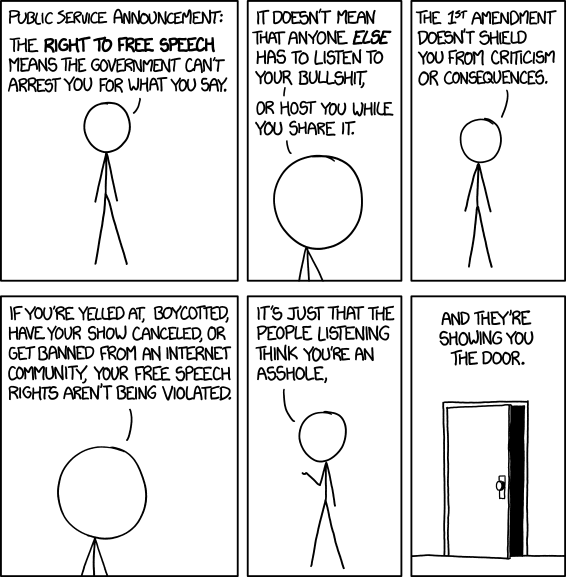
I've read articles about how some police departments are training their staff to engage in this behavior and using forfeiture as a profit center. What they are doing is wholesale theft.