One thing I've been noticing more and more since Not Just Bikes pointed it out is the shape of truck hoods.
I've gone over the hood of a Honda Odyssey minivan. It wasn't fun, but I walked away because I rolled over the sloped shape and off the side. I look at the big flat intimidating front grills of modern trucks as I ride my bike around town everyday, and it's very terrifying.
There's legislation around the shape of car hoods that make such things illegal, but trucks are exempt because they were viewed as "working vehicles" at the time the laws were written. Your personal truck is not a working vehicle. You think it's sexy and strong looking. I think it's terrorism. Stop making and buying these monstrosities.
* Lack of pedestrian safety standards for cars unlike the EU. Exacerbated by the increasing prevalence of SUVs which automakers receive higher margins on due to a loophole in CAFE fuel efficiency standards.
* Very lax licensing standards (easy exams, high tolerance for bad behavior, high BAC limits, etc) due to the sheer necessity of driving due to reliance on auto-oriented design.
* Decades of policy designed to increase LOS for vehicles which results in roads that are much wider, larger, much more expensive, and designed to carry much higher throughput than equivalent roads in other countries.
* Speed limits set to 85-percentile of vehicle speed along roads, coupled with high LOS on roads leading to high speed limits in places there shouldn't be.
* Uneven and very lightweight traffic enforcement due to the prevalence of driving and the impacts of not being able to drive on the general public.
* Resistance to traffic calming measures by local governments and planners obsessed with vehicle LOS resulting in unsafe streets for non-car users.
In Europe it is very common to have something outside the speed limit that makes someone slow down, and I don't mean speed bumps. They will plant trees along the road in slower areas which give the feeling that the road has narrowed (for example) and you feel like you need to slow down because they shoulder basically no longer exists. I find that very interesting. The US is just behind on road design, stuck in the 1950s. Civil engineers and road designers need to change the way they think about designing roads to actually take pedestrians into consideration. The way we set speed limits is pretty comical too.
I can't upvote this enough. People drive as fast as they can while feeling comfortable. Road design controls the outcome and the US will reduce a 6 second delay for drivers at the cost of pedestrian lives.
Big fast moving vehicles, shitty roads, very basic driver’s ed, speed limits that are too low to be realistic so they are poorly enforced, drinking and driving is common.
German here living on the US. This matches my observation. I believe this is because of enforcement. It seems extremely rare to be fined for using the phone while driving in the US (LA at least), while it's common in Germany.
I listened to this podcast earlier today, very interesting. They interview a researcher at University of Utah who studies distracted driving. The ergonomics and related distraction factors of In-vehicle Information Systems (IVIS) are fascinating from a UI perspective.
Unsurprisingly, tactile/physical controls are much less distracting than voice controls or virtual controls like touchscreens. Part of the reason is because physical controls are faster and more precise to modulate, so your brain is distracted for less time while doing something like adjusting the temperature with a physical knob.
No, they may not explicitly enjoy it, yet they likely appreciate the ease the automobile-focused society brings, even though it contributes to around 7000 pedestrian fatalities annually. Anyone rational would view such preventable loss of life as disastrous. However, the solutions — improved street layouts, less wide roads, use of speed cameras and so on — are often deemed so unpalatable that it prompts a flag on the article. It appears as though a number of readers here don't find 7000 annual deaths significant enough.
We have some real snowflakes who flag every headline that could be read as the least little critical of any facet of US culture/politics/society.
I mean, this headline can start a site-appropriate discussion of the technical details behind the facts. But, nooo, the snowflake interprets it as criticism of their culture, and instinctively downvotes to protect their sense of self. It’s sad more than anything, that level of fragility.
I operate from a different perspective when walking in that I assume cars are not stopping for me, they don't see me, and they have the right of way. I see many people blindly walking across streets when the walk signal goes green, they don't even look. There's too many inattentive drivers and texting drivers to depend on them to do the right thing.
I guarantee you’re not as safe as you think you are unless you literally never walk anywhere. Drivers illegally tint their windows so you can’t see them. Some can be staring literally right at you while stopped at a stop sign and not see you. The sidewalk isn’t even that safe, I see big trucks accidentally jump the curb and ride on the sidewalk pretty regularly.
My dad gave me a good bit of advice when learning to drive, which is also a good distillation of defensive driving in a nutshell: assume the other driver is about to do something stupid. Usually you don't even have to ASSUME in Atlanta, unfortunately.
Because many people in the US believe laws will protect them...walk out in a road and cars are supposed to stop for you. If they don't...you die. Pedestrians have the most to lose, but act very casually about walking so close to where cars are driving at high speeds. In the closest major city to me (Portland) the major increase in pedestrian deaths has come from the homeless population. No good statistics on why, but drugs were decriminalized a few years ago and there are suspicions that has something to do with it, but the data is not easily reviewed. Also, some major cities (like Portland) reduced normal traffic patrols that would help to curb speeding and reckless driving.
This is victim blaming, plain and simple. Why are people ever forced to be close to high speed traffic? The likelihood of dying goes up very quickly as vehicle speed goes up. It is possible to design livable cities where screwing up doesn’t cost you your life.
People aren't forced, they make bad decisions. The homeless in Portland often choose to camp near major freeways and cross them regularly. By near, I mean directly next to (like between the offramp and the freeway). The city isn't allowed to or chooses not to remove these people in unsafe areas and when they do things to dissuade camping next to freeways they are cast as terrible people for hating the homeless.
Driver was DUI, but was later found not guilty because they suspected even a sober person would not have been reasonably able to avoid hitting this woman crossing a major freeway in a bad area at night.
https://www.oregonlive.com/news/2019/09/homeless-woman-dies-...
I’ve noticed the same in Seattle. There’s also a more “I dare you to hit me” attitude in a lot of my fellow pedestrians than in other cities I’ve lived in. I’m sure that has at least something to do with it too.
These articles should be flagged, it's like catnip to subset of HN and always ends up in the same boring discussion. It's no different than other political or constantly rehashed topics.
If a political, technological, and social issue is resulting in tons of people being killed, you'd expect it come up in a forum for discussing policy, technology, and society.
US is
42,939deaths/5,349,230 million miles = 0.0050 deaths per million km
Germany (2020)
2,719 deaths/718056 million kilometers = 0.0039 deaths per million km
Norway
80 deaths/68232 million kilometers = 0.0012 deaths per million km
It certainly looks better for the US than it does when looking at deaths per capita, or deaths per vehicle. Though US still looks bad. You could argue US driving way more per capita is might also be due to bad design that makes for more traffic deaths
I would find the deaths per miles walked to be even more interesting.
We drive a lot so that number would be low, but if we’re dying quite a lot for how little we walk, that would be extremely telling of how bad the problem is.


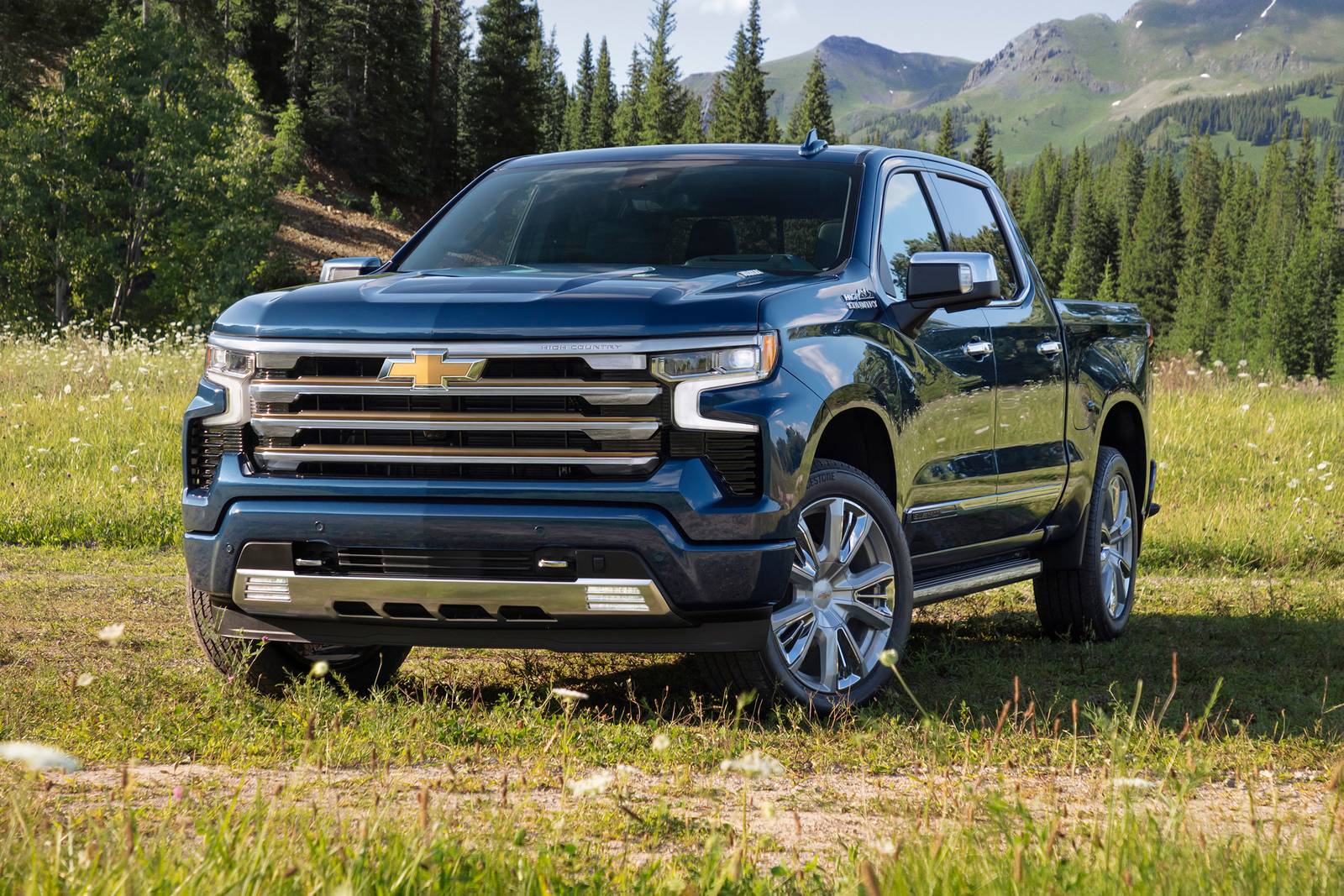
I've gone over the hood of a Honda Odyssey minivan. It wasn't fun, but I walked away because I rolled over the sloped shape and off the side. I look at the big flat intimidating front grills of modern trucks as I ride my bike around town everyday, and it's very terrifying.
There's legislation around the shape of car hoods that make such things illegal, but trucks are exempt because they were viewed as "working vehicles" at the time the laws were written. Your personal truck is not a working vehicle. You think it's sexy and strong looking. I think it's terrorism. Stop making and buying these monstrosities.