I recently faced this same challenge and solved it using Amazon SQS, a simple Lambda function, and a corresponding SQS consumer/relay service running inside the private LAN.
Essentially GitHub's webhook is configured to hit the Lambda function, which authenticates the request and adds the data to an SQS queue. The internal relay service watches that queue and passes requests to the private Jenkins server.
The architecture is similar to this[1] project, but since the public-facing piece runs on Lambda, it costs almost nothing to run.
This is almost what we do as well. The difference being that we have a API Gateway in front that just invokes the lambda on an internal network, which validates the webhook data and only then does it forward it.
Takes the complexity of having to use a queue out of the equation, though at the expense of potentially lost webhook calls.
Looks nice. The key difference seems to be the OpenZiti solution enables you to manage by identities (instead of IP addresses), and close all the inbound firewall ports? However, believe the two solutions would work together?
Yes, if you also need users to log into Jenkins from outside the private network (without a VPN), it sounds like OpenZiti would be a good option. In my case, Jenkins is only used from within the LAN. The SQS solution authenticates GitHub webhooks using the sha256 hmac signature (not by IP), and no inbound ports need to be open.
You'll still have open ports on the LAN. With OpenZiti you can even shut down the host firewall from having any open ports which I think is pretty cool. :) Plus you'll be able to access Jenkins from anywhere at that point - even from home - just like you were on the LAN. Maybe you'll find that useful someday in the future and give OpenZiti a try! :)
Also embracing OpenZiti allows you to give users access to Jenkins securely (or any other app you want/need to keep off the public internet) without using a classic style VPN.
Even if you nail the configuration and have nothing but sweet love for your favorite VPN it's still a perimeter security model and there's no real assurance that only your friends are inside that perimeter. I'll bet you that's not always the case. I don't mean to be ominous but it strikes me as a false sense of security. Going full zero trust is a more meaningful assurance that only authorized devices and apps can connect.
For more on this topic, I recommend Carlo Rovelli's The Order of Time. The book is very accessible to non-experts in the field (like me), and it opened my eyes to some super interesting and unintuitive ideas about time.
I've shared this before, but this has happened to me - 3 times - with different sites I created. One was very similar in nature to OP's (essentially a specialized tool/calculator with affiliate links to the products), and another was a very detailed guide for making a DIY electronics product. It was "creative" enough to be featured on the front page of hackaday.com, but I guess not enough for Amazon's affiliate program.
Traffic also wasn't a problem - in one case they pulled my program membership only after I had generated hundreds of dollars in referred sales (of course they didn't pay the commission). Needless to say, it has left a bad taste in my mouth ever since. In my opinion, if they have such a narrow interpretation of what "original" or "creative" means (applying only to blog-style content, or who knows what), then I frankly don't care to do anything more with their affiliate program or drive sales to them.
That's not really a fair comparison. Most western governments have an Ombudsman where citizens can complain if they are treated unfairly. A government acting against its citizens the way Amazon does against its users would be unlikely and unlawful, whereas Amazon can get away with it because they are not breaking any laws.
I don’t know last time I complained about the dmv to the government, it felt about as useless as complaining to HR. Probably less so.
You probably have more agency to change a corporation, if it isn’t a mega corporation. Mega corporations, good luck, unless you have lots of money or influence.
Ok government is definitely just a mega corp. the other lesser mega corps have some influence, but not us peons.
In the US, maybe we citizens would have a slight chance at having influence if we eliminated the 17th amendment.
I completely agree with the author. I've been reading a lot about the EVM, and while there's some interesting technology involved, it feels unlikely to be able to support any worthwhile applications outside of blockchain finance or moving $ around the world[0] (since the code can really only directly reference the blockchain itself).
It's a bit like playing with a programming language in a sandbox that has (1) has no I/O functions[1], and (2) has enormous costs associated with even the most basic of computations. Ok, it's not like that; it is exactly that.
Sure, you could build a crypto toy and convince some suckers to transfer some of their wealth to you, but calling it an app platform or the next evolution of the web is definitely a stretch. I sincerely wish that wasn't the case (I'd love to find an exception), but that's what I've come to conclude.
[0] Don't get me wrong, there's tremendous value in being able to move money around the world without the blessing of governments and central banks!
[1] Any interaction with entities outside the blockchain require oracles, and at that point, you might as well throw away the other benefits of being on a blockchain.
Output: Digital services, site subscriptions, digital assets, in-game items, NFT's representing real world assets held by trusted companies (wine, event tickets, tokenized securities).
None of this requires oracles and exists today.
Your mistake is thinking that just because the base layer is decentralised that we're somehow not allowed to connect to companies we choose to trust, just like we all already do.
Then it becomes interesting because there's a programmable market for these assets/services that didn't previously exist because the underlying value was not represented in an exchangable form. The outputs are also inputs.
Ethereum is the trustless, standardised substrate on which trusting parties can interact.
HackerNews will continue to fail to see the utility of this system for years to come until it's mature and undeniable. It will be an interesting case study into how experts missed the potential of emergent technology in the same way we look back on yesterday's commentators not realising the disruption of Amazon or the internet.
As to your second point, it's unlikely the end user will ever want to transact on layer 1. Layer 2 technology is making steady progress. See l2beat.com for examples.
> Output: Digital services, site subscriptions, digital assets, in-game items, NFT's representing real world assets held by trusted companies (wine, event tickets, tokenized securities).
> None of this requires oracles and exists today.
While I only mentioned oracles specifically, I should have clarified: I'm referring both to oracles (making queries to external data sources and providing the results to the blockchain), and to external code that interprets data stored on the blockchain and acts on it. I'm not sure if there's a name for it in common use (I'd call it something like a "performer"). Either way, the issue is the same as that with oracles; whatever decentralization or smart contract guarantees you had on the blockchain disappear as soon as you have external code interpreting blockchain data to then make decisions in external systems (digital services, site subscriptions, digital assets, in-game items, NFT's, etc). If oracles provide inputs to the blockchain, these non-blockchain pieces of code provide the real-world outputs.
Example: even if somewhere in the blockchain I can prove that I should own something in the real world, it's still up to your site/service/app/whatever to honor that through external code. If it doesn't honor it, I'm stuck relying on traditional legal means to intervene, just as with any other standard contract. That legal system – as flawed as it is – tends to work for contracts written on the back of a napkin, stored in a SQL database, or coded in a smart contract (though that's probably the most questionable at the moment).
If I'm wrong, please correct me, but I've been interested in this stuff for a while, and I haven't found anything that actually solves the fundamental problem of oracles and the interpretation of blockchain data. That problem is important because it undermines many of the primary selling points of smart contracts.
> Your mistake is thinking that just because the base layer is decentralised that we're somehow not allowed to connect to companies we choose to trust
So, honest question: why care about the base layer being decentralized if in the end, you choose to trust those companies? What did the decentralization do for you in that interaction?
Yep. Blockchain says I own this case of wine... but the other guy wont give me my wine! Who do I call? The physical, centralized police and the centralized legal system that back it. Without that legal system recognizing and honoring it, it's worthless. And if it all depends on my centralized legal system, then who cares about the decentralized blockchain. Might as well put it in a table in a database instance running on AWS, or in a written contract.
You could say the same thing about property deeds, contracts, etc. The fact that the laws of physics still apply in the world and thus people can still physically take things from you, harm you, etc. is hardly an argument against any specific method for establishing and recording ownership or contracts.
No, the basic problem is ownership rights over physical objects can't be enforced without coercive power, but blockchains and smart contracts can't use coercive power, therefore they would have to rely on an external entity to enforce such rights. But then the system is no longer "trustless", "permissionless", or "censorship-resistant", and therefore we have none of the supposed benefits of blockchains but we do have all of the inconveniences, which means at this point we're better off with a centrally-managed registry which at least is cost-effective.
This is a strawman. The entire ecosystem does not have to be 100% decentralised. There is massive utility in a trustless, permissionless, censorship-resistant contract layer connecting disparate centralised entities. A centrally managed registry would never be suitable for this task for a multitude of obvious reasons.
> There is massive utility in a trustless, permissionless, censorship-resistant contract layer connecting disparate centralised entities.
No, there's no utility in that, if ultimately enforcement relies on an entity that needs to be trusted and can override the blockchain.
> A centrally managed registry would never be suitable for this task for a multitude of obvious reasons.
Centrally-managed registries are already in use and have been in use for a long time, they exist in every single country, and entire markets depends upon them, but somehow they "would never be suitable for obvious reasons"? They have already been shown to be suitable, what on earth are you talking about?
I'm talking about a global, universal API layer supporting standardised contract enforcement and value transfer between applications. A centralised implementation of this would clearly be a bad idea.
If you don't see utility in this I don't know what to tell you.
> I'm talking about a global, universal API layer supporting standardised contract enforcement and value transfer between applications.
What does that even mean? How is a global API going to support the enforcement of a rental agreement? Or of a bond indenture? Who is actually going to enforce the contract? And what is the role of a global API in that? And what do you mean value transfer between applications? You want to transfer "value" (like a bag of rice?) between computer programs??? None of that makes the slightest sense. Meaningless gibberish intended to fool gullible idiots into thinking that blockchains are some kind of disruptive technology that is going to turn everything upside down. Nonsense. It's a pump & dump scheme, and little else.
Ignoring the condescending tone, value is already being transferred between computer programs. Trillions of dollars per year on Ethereum alone. A lot of the volume is undeniably speculation but denying that value can be transferred on blockchain is denying reality at this point.
Ethereum allows you to transfer digital tokens from one address to another. This is what it does. Calling this "transferring value between computer programs" is both inaccurate and pompous. It's like a truck driver insisting that you call them a "transporter of value". Nobody speaks like that. Your comments consist entirely of marketing buzzwords, which is unfortunate because this is a technology site and we're trying to have an honest discussion about technology.
I'm having an honest discussion. You have accused me of being "a gullible idiot", "pompous" and of using "marketing buzzwords" (which words?). You come across as being very emotionally attached to your negative opinion of the space.
Value can be transferred between programs through Ethereum. The tokens you mentioned have value, because people are willing to exchange them for money. So it's not an inaccurate statement. Web3 provides the standardised API through which these programs can communicate.
Don't twist my words, I never said that you were a gullible idiot. I said that using the term "transferring value" is inaccurate and pompous, and that you are using marketing buzzwords. And I stand by that, "transferring value" is an example of a marketing buzzword. It's not a descriptive term, because what is being transferred is digital tokens, which may or may not have value. Whether they have value is irrelevant as far as the technology itself is concerned. I don't have anything against you personally, but this is the way I see it.
If it helps you can read 'transferring value' to 'transferring digital tokens which have value on the market', the distinction is irrelevant to the point.
> Whether they have value is irrelevant as far as the technology itself is concerned.
I'd argue that it's not irrelevant. The whole point of the technology is, at risk of more 'marketing buzzwords', a decentralised way of moving value around (moving digitised tokens which have value on the market, around).
I had a look at your post/comment history. It's almost exclusively cryptocurrency focussed. I'm curious why you spend so much time discussing a technology you clearly don't think has a future.
It is irrelevant. An automobile engineer would not describe a truck as a "vehicle that transports value", despite the fact that most of the time trucks are used to transport valuable things. It's ridiculous. Nobody in finance refers to financial assets as "value" either.
Why are my comments focused on cryptocurrency? Because I like to discuss cryptocurrencies. I have thought a lot about them, and I think it's an interesting phenomenon from an sociological point of view. Plus, I like arguing with people who I think are wrong.
Imagine something like Robocop hooked up to the EVM, if you put your RealID in the escrow contract and then the ubiquitous camera network is unable to verify that you honored the transaction, well then you have 15 seconds to comply…
I worry that this is the endgame; you say "distributed organisation", I say "autonomous cyberweapon".
We're not that far from having a DAO that can bid on zero-days and use them against a list of targets of its choice. If a DAO can make POST requests it can launch exploits. A script kiddie without the kiddie.
Blockchain governs the DIGITAL sphere and in there can actually enforce. People who are trying to combine crypto with physical assets are a shrinking number. Focus on digital and its absolutely enforcable, to an extent not even governments can accomplish.
Not at all, blockchains can't enforce intellectual property rights either. For example, how is a blockchain going to stop an individual from using unlicensed content on their website?
With enforcable, what is meant is anything that can be programmed into a contract and be executed will be executed (enforced).
That can as an example be someone raising a million dollars for a crypto game by offering 10000 tokens for 100$ each. The million dollars are going to be unlocked in phases. 50k for proof of concept, 250k for alpha etc. Each phase have to be approved by the toke holders. If they dont agree that the proof of concept is good enough they can vote the unlocking down and there is nothing the game developers can do about that. That is what is meant by enforable.
We already know what "enforce" means. You said blockchains can enforce "digital" whatever that means. The only thing blockchains can "enforce" is that data are added to the chain according to some rules. There isn't any type of property right, digital or real, that can be enforced in this way.
I already explained what enforcement means in this context giving you a very concrete example. Why don't you show how that example is not what I claim it is. Instead of just repeating what you already said.
I can't help you see something you don't want to see.
> Why don't you show how that example is not what I claim it is.
Because, quite honestly, I don't what your claim is. You're saying that a blockchain can "enforce DIGITAL" which is a meaningless sentence. Are you claiming that you can write a program and execute it on a blockchain? Sure. I can do the same on my computer. This is not an example of enforcing property rights, which was what we were talking about.
You replied to a comment where I argued that property rights cannot be enforced with blockchain technology. So, yeah, it's pretty obvious that we were talking about enforcement of property rights.
> Focus on digital and its absolutely enforcable, to an extent not even governments can accomplish.
The Winklevosses came up with an elaborate system to store and secure their own private keys. They cut up printouts of their private keys into pieces and then distributed them in envelopes to safe deposit boxes around the country, so if one envelope were stolen the thief would not have the entire key.
the only thing the system can do is ask more and more from their users, but there is no way to know if the transaction is good: if it looks good, it is good.
so it can't enforce anything on its own.
a CC payment can look good, but it can be reversed because there other other channels, outside of the CC circuit, to prove those transactions are to be considered fraudulent.
There is no such mechanism in the crypto space, so basically they are good unless you have an issue that can't be solved by the chain itself.
Because the chain can't enforce anything.
p.s. note that I wrote the keys (plural) not the key (singular)
basically your answer is "have a multifactor authentication" but if that is broken by some malevolent actor, I can go to the police.
There's not true fro Cryptos, if they are stolen they are lost.
I have answered it and again you are answering it ex. here:
"A CC payment can look good, but it can be reversed because there other other channels, outside of the CC circuit, to prove those transactions are to be considered fraudulent.
There is no such mechanism in the crypto space, so basically they are good unless you have an issue that can't be solved by the chain itself."
This is a feature NOT a bug. It comes with it's own consequences of course but that's exactly what makes it enforceable just like physics enforce its laws.
This is a complete FAILURE to enforce property rights. If by stealing your car, I automatically own it, that means there are no property rights whatsoever.
No it's not. You are assuming that the entry on the ledger is a person it's not. It's a thing. I can steal all sorts of things from you in real life and if you don't know I stole them, then they will be gone forever.
You are still not understanding what is meant by enforcing.
> You could say the same thing about property deeds, contracts, etc. The fact that the laws of physics still apply in the world and thus people can still physically take things from you, harm you, etc. is hardly an argument against any specific method for establishing and recording ownership or contracts.
On the contrary, it's a strong argument for using those methods of establishing and recording ownership that are blessed by the relevant local legal system (or, sure, ultimately by those who control local violence, if you want to go all the way down). It's the reason why you get lawyers still insisting on using faxes rather than emails.
> This <legally enforceable contract> says I (should) own this case of wine... but the other guy wont give me my wine! Who do I call?
Answer: You have a cause of action for breach of contract. In UK/US/Aus/Canada/etc, you can "call" / take it to a court, and they may grant you the remedy known as specific performance, which is essentially a court order to do the thing that was promised. This remedy is available because the thing to be done was the transfer of property. The remedy is part of the law of Equity, a set of doctrines and principles that has been in development since the 13th century. It got its big break with people complaining to the King of England that "the law is too harsh, it should be fair!!!" and went from there, eventually becoming a huge body of law about exactly what it means to make the law fair, what principles to follow when doing that, and how to deal with the many categories of unfairness that come up regularly.
You might look at the DAO hack in this context and think, the Ethereum folks really threw out the baby with the bathwater when they decided to invent a new financial system that didn't have to play by the existing rules. Many people talk about ICOs etc taking us back to the 19th century and the Wild West, but smart contracts take us back hundreds of years further back, with echoes of literally the first people to complain to the King demanding a writ to remedy the injustice of the Common Law. If since then blockchain enthusiasts have come up with something better than Equity, I would ask that they let us know.
Main message from the people in The System to you: We have thought of all of these problems before, and we have solved them all before, and if ye who have spurned the legal system come running for help, ... we will actually welcome you with open arms, like we aspire to do for everyone else.
It is an argument against unnecessarily elaborate and complex methods of recording contracts like crypto.
A lot of important, trusted systems often don't have particularly sophisticated security in every single layer. Homes and mailboxes have simple locks. Online transactions have fairly basic digital integrity checks (ie. you connected to a bank's server using HTTPS with a secret cookie). Credit card chips and card readers are riddled with vulnerabilities. We still sign legal documents with like, pen and paper and a scribble that even children can forge.
These systems are still trusted because trust isn't established by infallible recordkeeping processes, it's the humans and the organizations and the written/spoken promises we make that matter. A legally recognized scribble is as trustworthy and useful as a foolproof NFT. Crypto's complexity adds very little in practice.
Sure. You need a state to enforce property rights.
But the point is that the centralized system that managed property deeds does not require an absolutely gargantuan amount of computation to be performed to do a basic transaction. And since I already need the state to enforce property rights, why not have the state also be involved in the recognition of who owns what?
> So, honest question: why care about the base layer being decentralized if in the end, you choose to trust those companies? What did the decentralization do for you in that interaction?
My trust extended only as far as a single interaction/asset. The rest of my wallet and the assets within are completely unaffected. A company might rip me off, and I might have legal recourse, or I might not. Such is life. We won't ever be able to decentralise away all trust. A single entity isn't able to manipulate all my assets, or print more tokens, or confiscate my money. The network is solid even if all the 'performers' are not.
To build a centralised 'universal API' on which applications can communicate and exchange value is a terrible idea. Who would own it? But such an API is surely a useful technology.
We do need reliable oracles for external data feeds- prices, weather, news... can all feed into contracts for extra utility. This is a hard problem being tackled by ChainLink and others.
Let's say everyone on the planet is Ethereum enabled tomorrow. What is the business case for the winery to use it in your example? I get that Ethereum or any other crypto can be another payment option for their customers. Beyond that what use does a winery have for a programmable substrate underlying its transactions with customers or suppliers? I'm not saying there is none but if you're going to rip on HN users, frankly it's hard to parse what this language even means.
I’ll bite. A winery could sell ownership of wine stored or wine yet to be made. The purchaser, if sold via an NFT, could resell that ownership with no interaction with the winery until claiming the wine at a later date.
This means both parties no longer need any relationship between the initial sale and claiming the eventual goods. The winery will simply be able to wait for someone to return with proof of ownership at a later date.
If the winery gave out certificates or built some app it would need to verify and maintain that. With an NFT there is very little work on their end.
Ultimately this turns these type of products into highly liquid assets. This will greatly increase their value to a potential customer and the initial purchase price. Which will make the winery more money for the wine it sells.
This can effectively be done with anything that can be claimed at a later date after initial purchase.
The question is can you really make it simultaneously cheap to trade and decentralized and always on. Or is the overhead of all that just make blockchain tech very awkward and suboptimal (especially since ultimately there's a centralized winery that honors the "claim" with actual wine - so no real need for decentralization). Instead why not just have a little centralized company that lets companies create ledgers of asset ownership for $300/month. If it's a real use case, any winery can sign up, etc.
Issue is blockchain tech doesn't actually solve anything
Transactions on most L2 chains these days are less than a penny.
There are dozens of popular mobile wallets that make viewing, sending, receiving coins / nfts trivial.
The problem that it solves is that there is no need for you imaginary ledger company to exist at all in a blockchain model, the winery cuts out a rent seeking service and the user gets a more secure and portable product.
Automation isn't just going to hit manual labor, blockchain and web3 will allow for the emergence of fully autonomous "companies" that operate via smart contracts.
Is this secondary market of goods yet to be produced something that people actually want to have?
Today the way this works is usually with a ticket or a receipt. The guy with the email receipt on his phone gets the food he ordered. The guy with the ticket gets into the concert.
There IS a secondary market for event tickets. Legitimate transfers frequently happen everywhere else e-commerce happens. Questionable transfers happen on the street in what I assume is low volume.
I’m not saying blockchain makes this any better, except in one sense: a lot of people with a lot of money are enthusiastic participants. If I had a winery you bet I’d be selling wine future NFTs, just to try and get the price bid up.
That's great! Hey look I would like to send you the rights to my crate of wine. You're the 1000th customer to my site. Or maybe you want to trade it for your in-game weapon. Or I just like you and it's a gift, anonymous internet user.
Of course I could just transfer directly to your Ethereum wallet. But why do that when I could explain you need to sign up to 'winespectator.com', I'll email them to arrange the ownership transfer, and if you're trading that weapon let's both sign up for a pre-agreed escrow service online and pay them a commission to arbitrage. How many forms do we need to fill in, and who is processing that data? I currently own my crate anonymously- only the person who eventually burns the token will need to provide details to the company for delivery.
As always, descriptions like this betray how little engine-peddlers know about horse breeding. Managing a stable has been a thing as long as there's been horses.
> Hey look I would like to send you the rights to my crate of wine.
You truly believe this can't be done without blockchain?
> You're the 1000th customer to my site.
You truly believe you can't track customers without blockchain?
> Or maybe you want to trade me for that in-game weapon.
You truly believe it's impossible to implement in-game trading without blockchain?
> Of course I could just transfer directly to your Ethereum wallet.
The only thing you could transfer is some meaningless numbers. What makes them meaningful is some central, trusted authority that will accept these numbers as proof of something. But then, since you depend on that authority to verify this... you don't need blockchain.
I think instead of reading what I wrote, you read "you need a blockchain to do this".
The anti-blockchain narrative on here is constantly attacking the strawman of "literally everything must be decentralised".
I'm arguing that a decentralised medium of exchange through which separate points of centralisation can interact is still a useful construct.
You're comfortable with your assets being codified in a thousand different databases in a thousand different representations but the concept of having a common database representing them as "meaningless numbers" is suddenly unacceptable.
So... Why did you write it? Of course you don't need blockchains to do this.
To reiterate: The only thing you could transfer is some meaningless numbers. What makes them meaningful is some central, trusted authority that will accept these numbers as proof of something. But then, since you depend on that authority to verify this... you don't need blockchain.
The blockchain facilities standardised transfer across a decentralised medium. I'm not sure how much clearer I can make my point. You could code alternatives to all the use-cases mentioned, but when you have an existing platform on which to interact, why bother? You want the game developers to implement the winery's API?
> The blockchain facilities standardised transfer across a decentralised medium.
It hasn't. It standardised the transfer of otherwise meaningless numbers, that's true.
In order for your winde order to work, a centralised, trusted party has to verify and accept those numbers, and say that, yes, they represent something meaningful to them.
The same goes for every other example. "Want to trade something for an in-game weapon": This only works if that game a) provides means of trading in-game items, b) can verify that a number in the blockchain actually represents an in-game item etc.
Without countless external entities agreeing to and cooperating on the meaning of this data this "standardised transfer" is literally meaningless. And these agreements will go as well as they already do in reality. How does blockchain factor into this?
> if you're trading that weapon let's both sign up for a pre-agreed escrow service online and pay them a commission to arbitrage.
>> The blockchain facilities standardised transfer across a decentralised medium.
>It hasn't. It standardised the transfer of otherwise meaningless numbers, that's true.
Sure, but that alone can have value. The idea being that people have already built entire trading platforms around tokens, fungible or not. Somebody who wants to enable easy trading of some asset (or futures contract or whatever), hoping for improved liquidity, could see using the platforms built for crypto token trading as much easier than trying to build their own exchange. Especially if it is anticipated that physical settlement demands will not be especially common.
To be more concrete: It might be simpler to get your single-vineyard wine futures up and running on crypto than trying to get it listed as a new contract type in a traditional futures exchange.
Now sure, nothing about getting your weird futures contract into some form of widely used exchange requires blockchain technology. It is merely leveraging the existing infrastructure others have already built around crypto.
This is not too dissimilar from the various ways people have found to get say precious metals as listed items on stock exchanges, despite traditional commodity exchanges or brokered OTC trades also existing. Obviously nothing about speculating on (or maintaining market liquidity for) precious metals requires a stock exchange, since we have those other ways of trading. However people have found getting access to the stock trading market to be worthwhile.
Obviously settlement for physical goods is a centralized processes (or possibly a somewhat decentralized process relying on courts and contracts). This is equally true for any exchange, crypto-based or not. The actual order matching process somewhat separate from the settlement process in traditional exchanges too.
I certainly would not argue that similar platforms could be set up not reliant on crypto in any way, and those could be superior (although network effect problem tend to plague attempts to set such things up if any sort of scale is desired). Most crypto stuff is still extremely overhyped, and a lot of interest in crypto seems to stem from crazy speculation, or people trying to avoid their government in some manner. (The latter is not just things like drugs, arm sales, or money laundering. It also includes more innocent reasons like people in countries with failing economies being terrified that their government can just seize the contents of forex accounts, stock exchanges etc, making their attempts to hedge against local economic collapse potentially futile. But governments cannot readily seize crypto wallets the same way, at least not unless you leave your holdings at some exchange.)
Yes. It may have perceived value. I mean, people spend money on useless skins in games, and perceive those as having value.
> Especially if it is anticipated that physical settlement demands will not be especially common.
Of course, you're buying wine futures and you're hoping that no one will demand the actual physical settlement of, you know, delivering you the actual wine. Sure. That's what NFT scam is all about.
> It might be simpler to get your single-vineyard wine futures up and running on crypto than trying to get it listed as a new contract type in a traditional futures exchange.
Call me when
1. might becomes is, and
2. it actually requires blockchain, and
3. has any applicability on the real world (like enforcement of contracts)
> Obviously settlement for physical goods is a centralized processes (or possibly a somewhat decentralized process relying on courts and contracts). This is equally true for any exchange, crypto-based or not.
Your so close to getting it.
> like people in countries with failing economies
I wish crypto-peddlers would stop pushing this extremely stupid narrative.
Ah yes. The market of on-chain assets. Self-reinforcing, self-congratulatory mass speculation and scams. There's an abyss between this, and even wine futures.
The interesting thing is not that you would need a blockchain to trade wine futures — obviously you don’t.
The interesting thing is that if you can sell the futures as (for example) NFTs then you put them into this Wild West of crypto enthusiasts where
1) All kinds of unpredictable things might happen to the token between sale and redemption! And
2) The culture of crypto enthusiasts might very well lead to much higher prices for your wine than people who actually know about wine think it’s worth, cf. Beeple.
Either or both of these things might motivate a winery to give it a shot, tokenize a few thousand future cases of their weakest plonk, and see what happens.
Just because your market works fine without the blockchain doesn’t mean there’s nothing to be gained by trying.
On the other hand, it might be illegal because: alcohol.
You said blockchains are more practical, in the present tense. The evidence strongly suggests that's not true. And there are plenty of reasons to think they will continue to be impractical in the future.
Stock brokers track perfectly the transfer of people rights to stocks millions of times a day without any decentralized ledger. In fact, a SQL DB has worked quite well for many years now.
If the wine cellar wants their customers to trade wine, I'm sure a centralized ledger based on a SQL DB would be much easier and cheaper to implement and scale to millions of transactions.
Yeah, that's surely trustless. And I totally trust the wine company to perpetually maintain and pay for such a thing, and totally not restrict the secondary market as has happened all the time.
> In fact, a SQL DB has worked quite well for many years now.
When you allow people to write their own smart contracts, bugs will happen. This can't be fixed, only dampened with a weakened interface to the blockchain.
When a bug in a smart contract happens you may now have a dispute, across borders, over the intent of the smart contract and the actual behavior.
Can I trade my wine in the weekend? Ah no, sorry, stock market is closed then.
Can I trade my wine at 5pm? Ah no, European wine stock market is closed then.
When you really 'own' the ticket, you can trade it anywhere you want, without being dependent on some exchange that's only open whenever and takes some fixed cut without any competition.
The fact that you can't trade on weekends is not because some technological problem, it's because there's no demand for trading on weekends. Do you think the technology suddenly stops working on weekends?
Yes, this is probably what you'd do in this hypothetical case, and it's hardly unheard of for contracts to be written up with transferability clauses. Given that we exist in a world where digital signatures also exist, it's unlikely to be particularly onerous.
("Continuously" is probably not the right word, unless you are envisioning the rather unlikely case of this transfer happening on an annual basis!)
Sure, or if you're willing to trust an electronic database you can put it in an electronic database. How do you think wholesalers buy and sell wine at the moment?
What happens if the wine goes bad? Who/what arbitrates in that scenario? Because from the winery's perspective, whoever currently holds that contract owes them money for the wine at a fixed price that was determined and sold in the past.
If I hold that contract and have to take delivery of rancid wine instead of fresh wine like I imagined, what's my recourse?
Basically how do you ensure the state of the real-world asset remains fixed throughout the duration of the contract?
In the case of wine, the real-world version of “going bad” is just that it’s not very good. When you bought the future wine, you were betting that it would be very good wine and you could resell it for more. The winery was selling it to you for “cheap(er)” because you assumed that risk.
So for actual wine, right now, you have no recourse: you bought the risk. I don’t think this would be any different with NFT-wine. Now and in the NFT case you already paid the winery, you owe them nothing more.
Now if they cheat and give you water instead of wine… I guess whatever real-world contract says you can exchange this token for wine would say which wine?
Most likely the first N wineries to do this would do it as a publicity stunt, and if it proved useful then there would be some precedent. Much of the wine world operates on reputation and trust.
For the vast majority of physical products that are not like wine: you’d need real-world contracts to back your smart contracts and the latter would only be useful for decentralization of the secondary market.
IIRC with wine futures you have to either collect your wine or pay for its storage, if you abandon it then at some point (per the contract) it belongs to the winery. At least with wine I think there is a lot of precedent here, there are norms you’d want to fit your crypto doings around.
Personally, I don't want the world to go back to "Bearer Bonds", and given they were banned I'm guessing the US government (and I imagine other countries) doesn't either. However, I'm glad to hear a basis for NFTs.
What does facebook give it? A free marketing page and limited discussion board and the ability for anyone to find it.
Ethereum would give it another payment option for customers. But also another payment option for suppliers. Could open a new hidden supply chain where a middlemen is not required.
It doesn't solve physically shipping but it does resolve one problem. Prompt payment resolution. A check can take 7 years to bounce.
A winery could assign a token to each physical bottle, and lets its customers freely buy (winery is involved) and then exchange their tokens based on the supposed bottle value ups and downs (winery is not involved any more). Then, from time to time, they come to the winery to take back a real bottle from a token.
Admittedly, there is little to program, but we can imagine all sorts of auctions, games (tokens becoming playable items in a virtual world, but still exchangeable for real bottles), etc., around those tokens.
Why would any of this need cryto? If you trust the winery to hold the wine you could trust them to rule the exchange. Each bottle could still have a token. Values could still rise and fall. All stored on a central exchange. These tokens issued by a trusted entity could perform the same function and can be cashed out.
The key feature of cryto is around connecting trustless entities. Once you centralize on a physical product stored in a trusted location by a trusted party you lose point involving cryto. Who cares how secure the token is when the winery can switch labels?
> Why would any of this need cryto? If you trust the winery to hold the wine you could trust them to rule the exchange.
That’s a little like saying “why would the winery need Apple to make computers for them, the winery could just develop their own computer hardware and software.” It doesn’t make sense for most wineries to develop its own online exchange system, and the fact that it’s technically possible for a winery to develop its own exchange system doesn’t mean that all existing exchange systems are pointless.
The critique being made in the original article, I think, is that it's extremely hard to find a hypothetical use case for blockchain technology that can't be done without blockchain technology. A wine exchange seems to pretty clearly fall into the "things we can do pretty well without crypto" category, so one needs to explain what crypto is bringing to the party that makes it a marked improvement. In this particular example, both "trustlessness" and "decentralization" are off the table (e.g., there is only one winery and you are trusting them to hold the physical goods).
Maybe, but there's some assumptions buried in here, I think:
- first, the token has to be usable by any exchange it's traded on. Different blockchain technologies may not be compatible. (For instance, you can't move an NBA Top Shot NFT from Flow to Ethereum.) This is a solvable problem from a technical standpoint, but given how fiercely ideological different blockchains are, there may be non-technical stumbling blocks that arise here.
- second, there has to be an "off-the-blockchain" legal connection between the token and the object the token represents, something that's recognized legally as a "bill of sale." This isn't a huge hurdle and I'd assume the purchase of the token includes language that covers this, but that legal language might include arbitrary limitations, such as stipulating that if you don't use their preferred exchange they'll charge you extra fees, or even restricting the token to specific exchanges entirely.
This is an issue that I think a lot of "smart contract" proponents just haven't come to grips with yet: when you read "contract" in terms of a blockchain, think "API contract" rather than "legal contract". A cursory search suggests there are Flow to Ethereum NFT converters out there, but if you run your NBA Top Shot NFT through one, does the NBA still consider it valid?
- third, this example is specifically tying the token to a physical object, which adds other complications. You may be able to successfully trade your token on Sunday, but the wine store may still only be open on weekdays.
The point is that there are multitudes of other technological solutions readily available which solve the stated problem far more simply then a blockchain.
Of course there are alternatives, and some alternatives may be better or worse depending on the features and qualities you desire. Again, there’s nothing unique about blockchains here. You could say the same thing about any random pick out of the top 50 CSS frameworks.
HN users only see an inferior tech stack, but fail to understand that an inferior tech stack might have Greater Utility for the common people.
HN users earn their living by being the best at what they do and choosing the best tech stack is a part of it, which is why they don’t understand blockchain. It’s an inferior tech stack, but it beats every other stack on game theory, which is not the usual purview of the average developer. Hence they reject it as “inefficient” because they keep looking at it through the prism of tech instead of society.
For society trustless distributed systems are better, but if you keep looking at it from a tech/throughout perspective, you’ll never get it.
ETH's current scalability problems are beyond terrible, but there are alternatives. You can use chains like Polygon or Avalanche that are EVM, so you get all of the capabilities of Ethereum, but without insane gas fees.
There are non-EVM solutions as well like Solana, which has substantially higher throughput while transactions cost a fraction of a cent.
Try out other chains than ETH before ruling out web3 imo. There's a lot of engineering and incredible products outside of the main ethereum ecosystem which is being masked due to ETH's scalability problems.
There are also standalone computation solutions that are under development such as Truebit, which if successful, could allow for smart contracts to execute complex calculations off-chain, avoiding both the increased gas fees due to complexity, and bypassing the gas limit altogether.
I've looked into some of the engineering that goes into Web3, and while I'm incredibly impressed, I can't quite shake the feeling that all we're doing is getting really good at counting paperclips. What real world problems does Web3 solve? It seems like Web3 has a ton of great solutions to problems that Web3 creates. Most problems that Web3 claim to solve can be solved through non blockchain solutions and even decentralization doesn't require a blockchain. The Internet is already decentralized to begin with.
Personally I've been exploring the concept of proof of ownership in the NFT space. I think there is a lot of potential in the technology that helps benefit creators and cuts out the middle man. I know we are quite a ways out from doing something like this, but it is feasible to do something like self-publish a video game and distribute as tokens, then sell it on a decentralized platform. It would cut platforms like Steam who take a large percentage out of the equation. Of course, Steam as an ecosystem is incredibly valuable, but it's just the first example that came to mind.
Really, the way I look at this is that in the past few years we have had a lot of engineering talent to explore the space and come up with unique products and ideas that the web3 toolkit enables, and we'll continue to see growth in the space.
My first proof of concept dapp I made earlier this year was a scheduling application that allows for you to arbitrarily schedule something on another ethereum address' calendar, assuming that they have initialized their profiles and set their rates, using an escrow to handle all monetary interactions. I could then host my dapp on a file storage system like arweave or IPFS, paying one time for hosting instead of a perpetual hosting fee. It wasn't perfect but it was a fun proof of concept.
But yeah, I think we'll continue to see a lot of innovation in the space, and see some really cool products over the next few years. If you have any doubt, the fact that a company the size of Facebook decided to pivot their company, brand and all, towards metaverse development (which will directly be utilizing NFTs), that should be a signal that web3 is going to continue to evolve.
The internet is not decentralised name one application or website which does not require a server in the middle between two clients.
Edit: but I agree there are already ways Web3 things can be done, and decentralization can be done without blockchain - the question I think is whether this impressive engineering is better than the existing ways
> ETH's current scalability problems are beyond terrible, but there are alternatives
The only alternative is ethereum L2s. Avalanche, solana, etc are centralized VC chains that do not have the foundation needed to be the infrastructure of tomorrow.
I keep hearing this argument but I really don't buy it, sorry. I think that over time these other chains are also going to naturally decentralize, at least in the case of Solana the primary barrier of entry is hardware. I think that actually having a product that works today is more important than a platform that hasn't been scalable since inception. Maybe ETH 2.0 will release sometime and all the ongoing scalability efforts actually do work, but until then I think it's absurd to write off other chains that are vastly outperforming it.
Edit -
It's really, really easy to see that a transaction on Ethereum is not even remotely worth the gas it charges today. I remember hearing ETH people trashing BTC transaction prices in 2017, but yeah I'm sorry, this is so beyond absurd I cannot support or recommend anyone use ETH as a layer 1 until it is actually a scalable chain. Not in theory, but actually works. Wasn't sharding and layering discussed in 2017? How much longer until it's actually usable? Gas price for minting a JPG the other day for me would have been $300. This isn't worth it in any world unless you are sitting on a fat stack of ETH you bought under $200. But then you should just sell it instead of actually using it. Don't you see the problem? Why do you think there's so many articles talking about how terrible Web3 is? It couldn't possibly be that people's first impression of the tech is on a financially impractical chain.
I like working in Solidity and think the EVM is great, and there's a lot of cool projects in the Ethereum ecosystem. But ETH is an unusable L1 for the vast majority of people until they solve scalability. No amount of decentralization dreams are worth it. Hell, you could even just use Ethereum classic if you wanted. It does everything ETH does because it's just ETH except they didn't have a centralized Ethereum foundation mutate the chain history because someone stole a bunch of money from them and only costs like $50 the last time I checked. If you care so much about decentralization shouldn't you like the chain that didn't have it's history changed by a centralized organization?
If you really want the most decentralized network possible, Bitcoin is it. I haven't looked into the taproot update too much yet, but maybe it'll be actually supported before ETH scales at this rate.
You should really do more research because that's not how it'll work.
The idea is that users will onboard straight to Layer 2 and stay on Layer 2. Layer 1 will only be used by protocols and extremely important transactions like nation-state transactions. You'll also be able to move between L2's via bridging protocols like Hop.
This isn't just Ethereum BTW. Other chains are moving to layer 2 rollups because that's just how blockchains scale. Ethereum is getting a lot of shit because it's dealing with unprecedented demand and it refuses to cut corners on important things like decentralization. Other chains will have the same fate if they grow large enough.
I'm simply stating how Arbitrum works today. And sure, once there's more adoption on L2s then there will be a reason to stay in the ecosystem, and I do get that it's inevitable that we'll have a multichain future (we have a multichain present anyways), but in this model I just don't understand why ETH has value in the thousands of dollars per token. The answer is simply amounting to "you cannot afford our chain so go use a different one". So I'll happily work with a more affordable chain with higher throughput.
I hope that the ETH vision works out because right now it's kind of a clusterfuck tbh. But until the planned vision is not theory and is fully realized, I think it's absurd to refuse to work with other L1 solutions like Solana simply because Ethereum has a large head start on decentralization. I think that if people try some Web3 apps on a chain like Solana or Avalanche, more people would be excited about the potential that Web3 can bring. Instead, we have people blindly yelling about how NFTs are bad for the environment or whatever nonsense, or that it cost someone $100 to move $50.
And regarding using ETH for nation state transactions, you can simply just use BTC for such important transactions. It's more decentralized than Ethereum and is just going to continue to decentralize.
Edit - my bad, seems like the week wait is from Arbitrum to ETH. Evidently missed that when I was trying to move funds from ETH to Arb. Ah well.
Really though, unless these transactions become more obfuscated crosschain this ETH ecosystem feels like an over engineered nightmare on a chain that couldn't scale. I keep hearing from ETH maximalists like you that this is the only way, while hearing it does not have to be this way from your direct competitors.
Take Solana for example. It takes a powerful computer with 128gb+ of RAM just to run a Solana node. You can run the ETH software on a raspberry pi.
High hardware requirements means fewer people can afford to join the network. This makes Solana more centralized. They also do some sketchy things. For example, in proof-of-stake algorithms the nodes vote on the next block. Solana counts votes as transactions which inflate their transactions-per-second numbers.
The Solana network has also been taken down by a software bug. This is much less likely to happen with Ethereum since there are multiple, independent development teams writing Ethereum client software. A bug in one client will only take down part of the network but not the whole thing.
Let's take another popular competitor Algorand. With Algorand they have two types of nodes relay and participant. The relay nodes take care of consensus. However, you have to send in an application to the Algorand foundation just to be allowed to run a node. There is not a lot of info on relay nodes but apparently the harware requirements are non-trivial.
Cardano I don't know as much about. However, there has been some debate over whether it's PoS algorithm is too similar to DPoS with similar vulnerabilities. Also, the founder of Cardano, Charles Hoskinson, is a known psycho and liar. This isn't just my opinion, just google him.
Polkadot has parachains which is kinda like sharding. However people are also developing Layer 2 rollups for polkadot. This helps prove my point that layer 2 isn't just an ethereum thing.
I don't really have issues with Bitcoin on a technical level, although I think they are too slow to change and adapt. Bitcoin also has multi-dollar transaction fees just like Ethereum which helps prove my point. They are also looking into layer 2 with the lightning network which, again, helps prove my point.
Overall, I really don't see any compelling alternative to what Ethereum is doing. Other chains are starting to look into similar Layer 2 solutions. Other chains are cutting corners to boost their transaction-per-second numbers. And other chains are run by questionable folks.
Thanks for writing up these viewpoints of different chains. I haven't had the chance to check out Cardano, Algorand, or Polkadot, but in regards to the downsides of Solana vs Ethereum, I'll state why I personally am choosing to create applications on Solana compared to something on the Ethereum ecosystem (despite me really liking the tooling that some projects like The Graph provide) -
I'm an applications developer - to me the most important things are lessened complexity, performance, and usability. You can certainly use chains like Polygon, which I might do in the future. However, from my viewpoint, the more complex the ecosystem becomes, the less likely it is to achieve widescale adoption unless there is a lot of masking of the underlying complexities. I've been interested in crypto for years, and been in the space as an engineer for about 6 months, and cannot keep up with how complex the Ethereum ecosystem has grown and how these chains scale. If I cannot keep up, there is no way I can expect for people who've never even touched crypto to be able to wrap their heads around it. I do know that there are efforts to mask crosschain EVM interactions, and personally haven't tried them out too much yet beyond standalone bridges like Synapse. If these projects work out and a year or two from now the ecosystem's complexities are masked, that is fantastic.
For me, I will happily take the tradeoff of making it more difficult / costly to become a validator (in the case of Solana), with the huge performance improvements it provides compared to EVM. While the cost of hardware does mean it is more centralized to entities that can afford to run a Solana validator, to me it is not a concern. It's still decentralized, albeit not as much as Ethereum. I was skeptical of Solana at first until I used it as an end user and am quite happy with the experience, there's a gigantic difference between a 1-5 second transaction time vs 30s - 1 minute (or higher, if you submit a transaction while there's a sudden dip in gas price). I've had transactions stuck on ethereum for an hour and a half because the gas price metamask suggested was too low, there was a 5 minute window I submitted my transaction where the average gas price was super low. Same with Polygon, I've had a transaction stuck in a processing queue for half an hour.
These interactions to me have driven me to look into non-EVM solutions because it truly leaves a bad taste to have to wait helplessly on ETH to process these transactions. Hence, Solana's throughput and promises that they will not need to rely on L2 solutions to achieve scalability (whether that is true is to be tested by time I suppose) are incredibly attractive. It being down for a day was bad, yes, but the mainnet has only been live since last year and is still in beta, and has only happened once to my knowledge. I will still take that downtime given the incredible performance the chain provides. And if it is true that Solana will not require L2 solutions to scale in the same way ETH has, then it's even more attractive to me as an app dev. I think it's likely to be a lot easier to convince the average person to use a platform like this, compared to a complex ecosystem which is multichain only to allow for scalability.
I definitely understand that to a lot of people, decentralization in ETH is the number one driver. However, I do want to emphasize there are certainly reasons to use a chain like Solana, despite having a lessened degree of decentralization.
There are I/O functions - oracles like Chainlink which put real-world data on the Blockchain. Those can also be further decentralized or at minimum used only for services where you have to trust a centralized entity without having to exit the Blockchain just for that. Those already enable me to e.g. quickly bet on TSLA via synths with money I have in crypto without cashing out and going through a broker.
>(2) has enormous costs associated with even the most basic of computations.
On one of the chains (Ethereum) but there's plenty of other popular chains with much lower costs.
tell us something we didnt already know. you can solve the speed problem by using solana or literally any of the other 100 coins that claim to be fast, or eth2 in six months
i am not even a person who is a fan of blockchains (since they are mostly poorly designed, unfounded, etc)
Algorand also uses Proof of Stake, is much faster than ETH, and supports smart contracts. MSM won't write about it for the same reasons they won't write about a large AWS outage but they _will_ write about a Facebook outage. It's not a conspiracy; it's just not interesting to laypeople yet. The shitshow of art NFTs make for good press.
Which claim? The meme that transaction throughput is inherently low in crypto is falsified via solana (as mentioned) or avalanche. Bitcoin will likely always be low TPS. Ethereum 2 maybe will eventually ship.
The fact that Photopea is better than GIMP in so many ways (does GIMP still not have adjustment layers for non-destructive editing?), and was created by one person is a little depressing, but also inspiring at the same time.
The main trouble with GIMP (and Inkscape) is lack of first-class CMYK, making it irrelevant for any print-targeting activity. Otherwise the features have advanced in the last few years and the coherence is not bad, the photoshop crowd being in the same ballpark for me.
You know what's more than little depressing? That each time any similar topic comes up you don't have to scroll down very far to find someone in the comments that will bash GIMP for some random thing.
You're comparing an ad-supported/subscription web service making a good part of 6 figures per year with software maintained largely by volunteer work for the past 20+ years.
I apologize - I truly don't mean to bash GIMP and I appreciate all the work the volunteers have done. It has come a long way and appears to be getting better with every release.
My reliance on adjustment layers and non-destructive workflows probably doesn't represents the majority of GIMP's user base, and that's ok. I can't really use it seriously for photographic retouching until it does have that, but I'm glad other people get a lot of use out of it, and the other features that have taken higher priority surely make sense for a great number of those people that do use it regularly. I hope that drives more usage, donations, and development.
Nomen est Omen, with a name like GIMP what can you expect.
I mean, the software name is literally slang for a disabled person.
Why don't they start from changing the name I don't understand.. Open Source projects have these odd ways of just sticking whatever somebody came up in the late 90s and rolling with that.
Yeah I know that.
But do the people looking for a professional photo editing program know that. I'm just saying if you want to make it big or attract developers, maybe naming your software Gimp is not the best thing either..
A lot of the best software is made by one person. Large codebases and organisations have significant inertia that make producing good stuff hard. You’ll also get greater deviation from the mean in a single developer (so a lot of the worst software is also made by one person).
I agree – the number is probably insignificant, but I don't think you have to restrict your estimate to people who hate AMP. Basically an average iOS user (likely using Google as it's still the default last I checked) who in the past installed an extension to block unwanted content (ads/malware/etc) may be blocking AMP links without even knowing what they are.
Not sure if this is DIY enough for you, but I'm using an MQ131 (about $20-$30 on Amazon, probably cheaper directly from China [1]) in an air quality monitor I'm building. There's an Arduino library for it [2], and from what I can tell so far, it does work, though it's probably not super accurate. It's also somewhat sensitive to environmental factors, but you can correct for some of that with known temperature/humidity.
[1] There are a few different kinds of MQ131 (for high and low concentrations); you'll probably want the low concentration one. I also removed the bare sensor from a breakout board I purchased so I could access it directly from my custom PCB.
That's exactly what I'm looking for, looks like I can get a $30 MQ131 with detection a range of 10PPB-2PPM [1], and a "Good" indoor level is 0 - 54ppb [2]. It doesn't need to be super accurate for my use case, basically I just want to turn on the electronic filter and see if there are any detectable levels of Ozone.
> They got a bonus of $20 for every question they found where their answer was more correct than the original.
> We need to put care into our systems. We need to build checklists and peer review and resilience into the way we express our carefulness.
Yes – the systems help, but proper incentives are also super important. Granted, designing a system wherein the incentives are properly aligned with the goal (and not easily manipulated; shortcuts can and will be exploited by humans and ML algorithms alike) is no easy task.
I'm all for cleaner air (especially reducing dangerous gases and pollutants), but at what point does the over-sterilization of our environment (specifically with regard to microbes) do more harm than good? People in my family suffer from various allergies, and many suspect there may be at least some link to not being exposed to enough allergens at an early age (father was a surgeon and our home was always clean – nearly to the level of an O.R.).
It’s not just about the #’s. There is a huge difference between indoor air composition (which humans haven’t evolved for millions of years to account for) and outdoor air composition for the same, say, PM2.5 metric. E.g. indoor air might be mostly dead skin and dust mites, outdoor air might be mostly burned ash and bacteria, etc.
Unfortunately, the fact is that most people are now spending something like 20 hours a day inside… there is no easy answer. I sometimes wonder how much the sterilization hypothesis is wrapped up in the effect of prolonged indoor air exposure.
This is why I feel a run or bike ride outside is worth far more than the same amount of time indoors in a gym. Combined with a bit of weight lifting (which you can do at home), it's a pretty good total body workout.
I am happy many folks around where I live started to go out for their exercise during COVID but I hope they keep that outdoor habit after the pandemic is over.
If you can take your bike ride where there isn’t much traffic and more nature by any means it’d probably be not only better for your body but also for your mind. A lot of us are spending way too much time indoors and should take any ocasion to be outdoors
I switched from biking to work to riding a spin bike after the pandemic lockdowns, and since I'm no longer riding on roads with traffic, I've probably increased my life expectancy since I'm not going to get hit by a car in my livingroom.
I usually ride my bike around 5:30-7am when traffic usually isn't a concern. I also choose routes that are also low-traffic but still rewarding (decent climb and scenery).
If you look at statistics there are more fatal crashes between 4am and 8am than between the 4 hours after. [1]
I looked it up, because I would've thought the missing light during night and dawn times and the more sleepy drivers probably offset any safety gains from less traffic on the roads. It's also much easier to speed with less traffic.
That sleepyness is a factor in car crashes can also be observed with increased rates shortly after winter/summer time changes.
True, but I think the parent comment was referring to less congestion. When it comes to bicycling, I always feel that it's my responsibility as a rider to look out for my own safety. Always regard all and any cars as being driven at 4AM by a drunk driver - regardless of time of day. In the middle of the day that means keeping track of multiple vehicles in different directions relative to my path.
During low traffic, there may be one vehicle to keep track of, and few pedestrians or other bikes.
That safe environment is quickly turned into an enabler for more aggressive and careless riding though. For fun and for getting from A to B faster.
Interesting - the data you shared isn't bicycle related, just all motor vehicle crashes.
It might be more interesting to look at bicycle fatalities than fatal car crashes [1]. Looking at the time-of-day distribution, fully 50% of such fatalities happen between 3pm-midnight. 6-9am is a higher risk slot (12%), but I'd probably avoid biking during 8-9am regardless.
I usually do the same thing, but most of my route is on a local shared use path. Getting out there before most of the joggers is just so much more relaxing.
The particulate matter that I worry about isn't microbes, it's all the crap that we're creating and putting into our environment with things like power generation and vehicles, which makes up the majority of the small particulate matter.
Radon buildup is also a potential concern if you have your house sealed up. Opening the windows is the best way to clear it, but activated carbon filters should capture it.
Just make sure you're masked when you clean or replace any of the filters.
For radon, we installed a suction fan inside our house that sucks air from under the house. That lowers the pressure under the house, and radon doesn't seep in. It made the measurements go from ~120bq to 20bq.
As far as I am aware unless you are building deep underground or have built your house on radon rich bedrock, or your house is entirely made of granite, this is absolutely not a concern for the average person.
If you are in doubt you can look up what is the expected radon exposure on the ground region where you live. Most people will have a higher radiation exposure from an arm x-ray than from ground leaking Radon.
It's location dependent, but more people live with radon seeping up from the ground than you would think. Some countries now have building codes that demand the foundation gets sealed to prevent it.
"Every building contains radon but the levels are usually low. The chances of a higher level depend on the type of ground. Public Health England has published a map showing where high levels are more likely."
getting a sensor at a reasonable price is tricky since Radon emits Alpha radiation - I managed to get one at around £300
It's not that much of a concern, but mostly because tests are widely available. Test your basement for radon, and only worry about it if the levels are high.
Radon is an alpha emitter which gets into your lungs, so that comparison to an arm x-ray isn't entirely fair. Otherwise I agree, it shouldn't be a concern unless you live in the first floor on granite.
It's right they don't penetrate. However, the lungs is one place they don't need to penetrate, they get direct access to some very valuable (to us) cells in our bodies, which are especially vulnerable to cancer, and do grave damage to them. From 10 to 1000 times more damage than equivalent energy gamma or beta radiation, according to Wikipedia. Radon as a health problem isn't some crank thing.
The composition of airborne particles depends highly on what size you're measuring. The stuff you see when you kick the carpet is the "big" stuff like cotton breaking down.
Two categories, VOC and particles, I don't worry about eliminating from the home.
I aspire to have zero particulates in my home air, it takes some doing. Much of the particles are of human/industrial origin anyway. Exhaust and tire particulate and various broken down human built materials. (and an overabundance of human pieces that fall off and collect in ways that wouldn't happen outside)
I also aspire to have a low CO2 PPM inside, this conflicts with the previous (i.e. it is difficult without intense forced air exchange with the outside to achieve CO2 levels less than twice outside levels.
But to the contrary, I do not use disinfectants ever except in very specific circumstances. I go out of my way to not buy products which make disinfectant claims.
I think human beings need to be out in nature, to regularly come into contact with living soil. Not just "nature" of curated footpaths and manicured, fertilized lawns and parks, but actually getting dirty outside where other organisms live. It's hard to do in cities, and growing up on a farm it still seems absurd to me that I have to aspire and do great organizing to find myself somewhere in a city where I am not standing on a surface that has been engineered by people. The closest I can get is usually the strips of grass along the sidewalks that act as nothing but dog toilets. (I love dogs, but city dogs offend me. They're animals, they want to be outside and not just tethered to you or for the occasional adventure to a park)
An somewhat gross anecdote:
Several weeks ago I got a cut on my foot from some shattered glass that developed into an odd looking infection with red stripes/blotches that I was on the edge of scheduling an appointment for a doctor. I happened to visit a local lake and dipped my toes in for a bit. The next day I was amazed, the redness which had been growing in intensity for a couple of weeks was just completely gone. Maybe it was a coincidence but I strongly believe that whatever was having a grand ol time eating my foot seems to have made a tasty meal for whatever cocktail of microorganisms were hanging out in that lake (I assume it was a fungal infection which was outcompeted by a restored microbiome seeded from the lake)
I aspire to have zero particulates in my home air, it takes some doing. Much of the particles are of human/industrial origin anyway. Exhaust and tire particulate and various broken down human built materials.
Particulates seem to be the easiest to remove -- much easier than VOC's and other gases.
My new furnace has a MERV 11 filter that I've been playing around with in recent days as we've had AQI close to 100.
I have an air quality monitor (that measures PM1, PM2.5 and PM10) in the house, within about 20 minutes of turning on the furnace blower, AQI of 70 inside the house drops down to less than 10, and 20 minutes after that, it's down in the low single digits.
I have a MERV 13 filter that I could put in the furnace, but I'm not sure I need it since the MERV 11 seems to handle it.
Yeah I lived maybe 100 meters from a busy road so I bought an air cleaner out of concern, but also got an Arduino with a serial device monitoring PM 2.5. PM 2.5 was always low teens or single digits, until I blew out a match next to the device and it went to 100s but dipped very quickly, so I think particulates aren't the biggest concern in most houses, unless maybe they spend all day with the windows open.
I tested my indoor sensor (Davis Airlink) by comparing to others in my neighborhood -- I set it up outside on the first bad air quality day we had and an hour later it was with 5 AQI points of the 4 PurpleAir sensors within a quarter mile.
Certainly not professional level calibration, but shows that it's within the ballpark. Unfortunately I don't think there's an official EPA monitoring station within 10 miles so I can't really check it against a calibrated monitor.
Aside from trying to buy a commonly used reliable device, that what the match test was for. When my device was reading 12ppm pm2.5 and a blown out match made it read in the 100s clearly the device is working to some degree of accuracy. I could've checked it outside I guess but I think local air conditions would predominate over any official city average I could have compared it against.
I grew up on a farm with a lot of animals around, and spent a ton of time in the woods until I was 18. I have terrible allergies and asthma, so farm life was pretty awful. YMMV
No, it almost certainly does not. There are lots of reasons why farmers would have less asthma, one being the fact that there is a correlation with asthma and ASD, a correlation with ASD and intellectual excellence and therefore a potential reason why you don’t find many farmers with asthma or other disorders on the autoimmune spectrum. This study is a heuristic at best. Kill epidemiology with a rusty pocket knife.
This is a legitimate concern. What we do is monitor the outdoor air quality, open the windows when it's good, close them when it's bad, and skip the air filters inside unless indoor air quality is measured to be bad. Which only happens during wildfires as our house is modern and pretty well sealed.
Once our children are past the age of 10 or so we will probably go back to running air filters all the time. But the early years are crucial for immune system development and lack of exposure to the natural environment in early years is likely to be one of the biggest reasons for the rise in allergic diseases.
If you get a particle meter you quickly learn that the biggest source of particulate isn't gas but cooking (and especially lightly burning) food. The slightest smell of smoke means your home is going to be like (insert terrible air quality city) for a few minutes to a few hours depending on filtration.
One of the worst sources of this is the fact that so few places have real vent fans above cooking surfaces (the sucking through the microwave business does essentially nothing).
Combustion products from gas stoves are specifically implicated in asthma. Children in houses with gas stoves have asthma at higher rates and the effect is not small. People with electric stoves cook too, but their children get less asthma.
Perhaps the higher heat has something to do with it. I still suspect that not all particulates are made equal, so even though burning food makes more PM2.5, perhaps the particulates from the gas combustion are worse for us in some way.
Still, I try to avoid any of it! I have an induction stove, but now do things like skin-on salmon in the air fryer because it produces basically no smoke, whereas it used to smoke my house out when I did it on the frypan. Requires a lot less supervision than to stop it burning in the pan too, which is nice (but perhaps I was always just doing it on too hot a pan)...
If your gas is burning yellow, it is producing soot. If it is burning blue, it is producing very little soot. (the yellow you see is actually hot particles of soot glowing, but at a much lower temperature than the gaseous fuel-air mixture which glows blue. Gas flames can just get pans quite a lot hotter than electric or induction, generally.
>Gas flames can just get pans quite a lot hotter than electric or induction, generally.
This claim doesn't really pass the smell test for me. My induction burner gets plenty hot really fast, much warmer than I could ever practically use while cooking, even. After a quick search I was not able to find any data supporting the claim either - the only data I was able to find seemed to support induction peaking out at significantly higher temperatures than gas.
Do you have any data on gas vs induction- max temperatures?
The gas flame is as big as your burner is, there is a lot of variation there that has to do with the physical characteristics of the burner and gas line pressure.
An induction burner will be limited to about 1.5 kW if it's a portable unit and maybe 2.5 kW on a built-in range.
A gas range will usually have a high rating of 15-20,000 BTU/h which works out to ~4.5-6 kW.
But thermal transfer efficiency is different, they both depend on the size of the pan, the material, shape, etc.
Stick a needle into a 3000F flame and it will be red hot in a second. A thin smallish pan can get super hot. You can't just have a "max temp" rating. However induction ranges will have some thermal protection for their insides.
If you spill something, the flames will also burn what you spilled.
I have both gas and induction. I don't think it makes sense to cook higher than 250C, because all oils will burn at that temp. And the induction works surprisingly well in this conditions, subjectively seems to be even better than gas (faster heating, better heat uniformity), did not expect that.
"Our meta-analyses suggest that children living in a home with gas cooking have a 42% increased risk of having current asthma, a 24% increased risk of lifetime asthma and an overall 32% increased risk of having current and lifetime asthma."
https://academic.oup.com/ije/article/42/6/1724/737113
The study has multiple parts. The part of the study I quoted is not specific to nitrogen dioxide, but a general conclusion about the combined effects of all of the properties of gas stoves. The study does not have enough information to conclude that the effect is entirely or even mostly caused by nitrogen dioxide in particular, or any other single cause. I did not claim that particulates are the cause. The point is that gas stove combustion products are harmful to children and probably everyone.
It depends... some microwaves are a) connected to an actual vent and b) have decent suction.
However, they cost a sizeable chunk more than the cheap shit you find in rentals. (In SV, that cheap shit is looking spiffy, but it's still cheap shit. If it says Frigidaire, you know it's not exactly high end)
This is my only dealbreaker in rentals. I will happily pay more for a unit with a real exhaust fan. Its crazy that we expect them in bathrooms but don’t expect them in kitchens. Health concerns aside, who wants their whole house to smell like fish for hours after cooking.
Yep - but it's a space question. (I live in a house from the '40s, I have no idea if people back then were somehow 30% smaller or something, but having a full hood and a microwave is just a fantasy given the available space. One day..)
People were slightly smaller in the '40s, but the main difference is that they had a lot less stuff. Compared to the purchasing power, furniture was more expensive and a vast majority of today's appliances did not exist at all.
A typical kitchen had a stove and either an old-fashioned icebox or a fridge, and that was it.
I noticed some toilets in older houses in the bay area were comically small for me at 6'2" and I as I rule couldn't see my face in mirrors standing up (they were mounted so the tops were about at shoulder level. People from different places around the world are also different sizes (a lot of this has to do with multi-generational semi-inherited nutrition availability)
> at what point does the over-sterilization of our environment (specifically with regard to microbes) do more harm than good?
This is a valid concern, here is a relevant peer-reviewed paper that models the impacts that interventions such as lock-downs, masking, and excessive sanitization may have in the context of the ongoing pandemic [1].
Quotes from [1]:
> Nonpharmaceutical interventions (NPIs) have been employed to reduce the transmission of severe acute respiratory syndrome coronavirus 2 (SARS-CoV-2), yet these measures are already having similar effects on other directly transmitted, endemic diseases.
> we consider the implications of SARS-CoV-2 NPIs for two endemic infections circulating in the United States of America: respiratory syncytial virus (RSV) and seasonal influenza
> Using laboratory surveillance data from 2020, we estimate that RSV transmission declined by at least 20% in the United States at the start of the NPI period.
> We simulate future trajectories of both RSV and influenza, using an epidemic model. As susceptibility increases over the NPI period, we find that substantial outbreaks of RSV may occur in future years, with peak outbreaks likely occurring in the winter of 2021–2022.
> Longer NPIs, in general, lead to larger future outbreaks although they may display complex interactions with baseline seasonality
The most important takeaway from this paper is that it will be critical to prepare for this phenomenon to prevent the over-utilization of healthcare facilities across the globe. Personally I don't see how anyone could argue for longer and more intense NPIs if we begin to see this play out.
I'd say: look at what they're allergic to and check in with anti-nutrients.
Sometimes ppl are not just allergic to gluten, but the whole category of lectin(which is in every seed), they just don't react as strongly, but they're never really healthy and suffer from all kinds of ailments.
the primary reason I disagree with this is because I didn't have allergies and I grew up with that theory, my immediate circle would criticize allergy prone people as being weak and coddled too hard, not allowed to be exposed to things
and then I travelled to another country with different kinds of pollen in the air and I wound up suffering from allergies there, how humiliating! so I thought, but really just humbling
looking up how to remedy it I found that one accepted train of thought now is that people are prone to develop allergies at any age, let alone being exposed to things different than where you grew up
so I would nip the over-sterilization argument right there. keep indoors clean, go outside.
Shouldn't your experience make you believe more in the over-sterilization argument?
When you traveled you got into contact with allergens that your body hadn't encountered before. If you had been in contact with those allergens when growing up then perhaps you wouldn't have had an allergic reaction?
>I found that one accepted train of thought now is that people are prone to develop allergies at any age
If you've never had soy before then how could you know whether you have a soy allergy or not?
I'm not trying to convince you either way. Just some holes in the argument.
I'm allergic to grass pollen myself. I have no idea how that squares with the argument, because I certainly never shied away from grass in the summer. But it's a fairly weak allergy.
You can develop allergies to things you had been exposed to early in your life. That's not a hole, if I didn't make that clear that's what I also meant, in addition to new allergens.
Put in other terms, your body can overreact any time for any reason causing inflammation.
From what I've understood on the subject is that it's not super-well understood yet, with the common advice early on having been to avoid exposure to common allergens for young children (because potential anaphylactic shock being a bad thing), until it was observed that children i Israel generally showing a lot lower rates of peanut allergies, and that very young children in Israel are exposed to peanut-containing snacks early on. At this point, the advice was reversed to that young children should be exposed to potential allergens early on (because developing a life-long allergy from under-exposure to an allergen is worse).
The rest I'm guessing is extrapolation from that - lack of early exposure = negative.
This is something that I've been told over and over - early exposure to things like dust, pollen, nuts etc basically eliminates allergies when older.
As an example, I was never exposed to cats early age but dogs yes. Now I have a mild reaction to cats hair and nothing with dogs. Of course this isn't a scientific study that can be validated but it does sort of make sense in my mind.
My wife was exposed to both from an early age and this continued until she was 15. Then she developed a mild allergy to dogs and a stronger allergy to cats (can't be in the same room with one).
I strangely had the same experience with hay fever. Never suffered from it then right around 15 it hit me pretty bad. I moved countries 5 years ago and again I no longer have hay fever symptoms so for sure they are not simple.


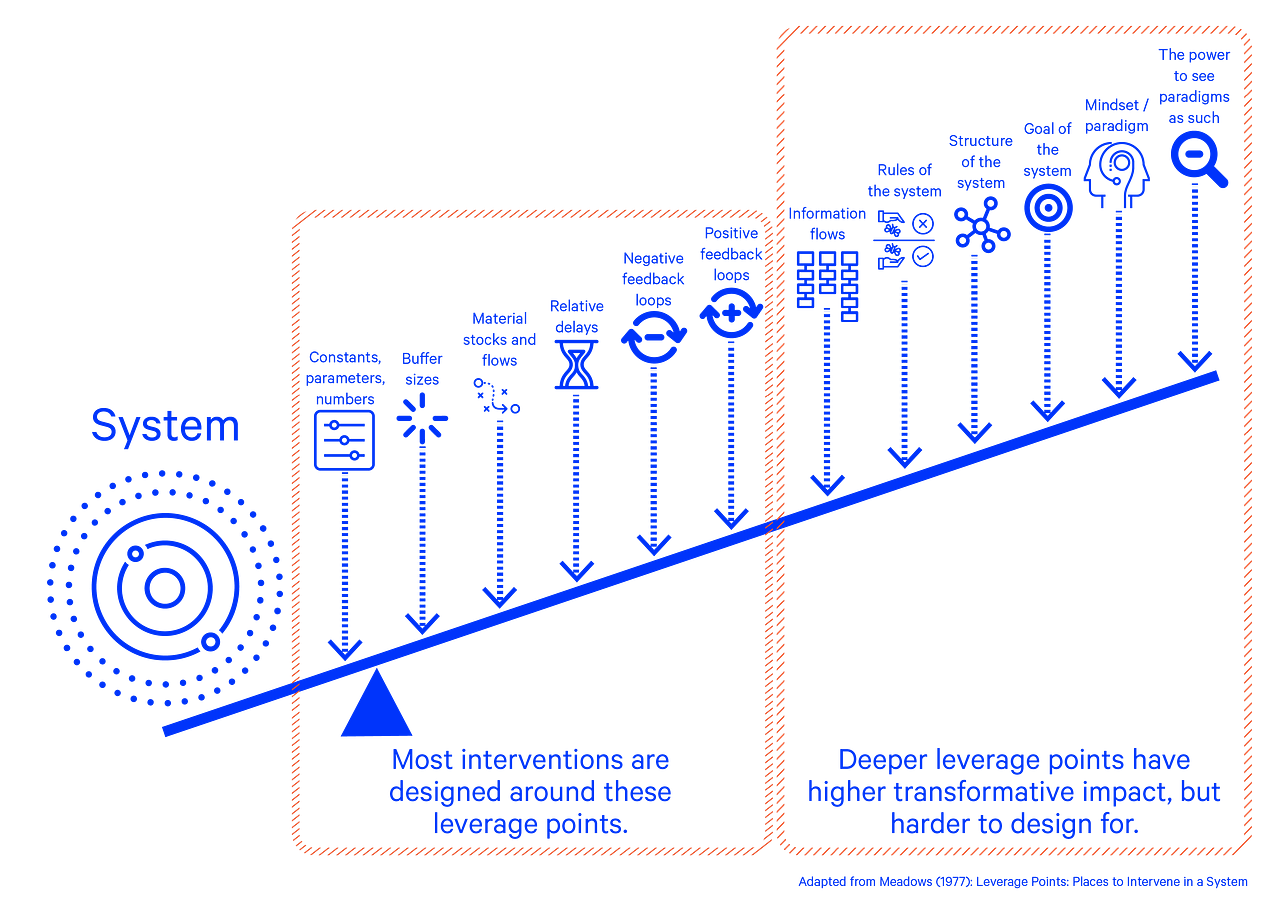
Essentially GitHub's webhook is configured to hit the Lambda function, which authenticates the request and adds the data to an SQS queue. The internal relay service watches that queue and passes requests to the private Jenkins server.
The architecture is similar to this[1] project, but since the public-facing piece runs on Lambda, it costs almost nothing to run.
[1] https://github.com/osbuild/webhook-relay